Friday, October 31

Second Space Disaster in a Week: One Dead

This has not been a good week for the private sector space industry.  Earlier today, Virgin Galactic's SpaceShipTwo crashed in the California desert during a test flight, killing one pilot and injuring a second pilot.  The spacecraft, built for space tourists, was using a new rocket fuel, which may have contributed to the accident. 

On its website, Virgin Galactic stated:
Virgin Galactic's partner Scaled Composites conducted a powered test flight of SpaceShipTwo earlier today. During the test, the vehicle suffered a serious anomaly resulting in the loss of the vehicle. The WhiteKnightTwo carrier aircraft landed safely. Our first concern is with crew and their families. We will work closely with relevant authorities to determine the cause of this accident and provide updates as soon as we are able to do so.
It has been 10 years since SpaceShipOne opened the door to space tourism, and this crash can only increase the wait for the hundreds who put down money to be part of the project. 

At a press conference earlier today, Stuart Witt, responsible for the Mojave Air and Space Port, said: 
We are doing this for you and your generation. It is a cause far greater than any one of us singularly. I compare it to the Magellan expedition [the first circumnavigation of the Earth].’
I don't think Magellan was running a tourist outfit back then, but I understand the sentiment.

Image Credit:  KABC-TV/AP Photo

Tuesday, October 28

Disaster Strikes Orbital Sciences' Rocket

Orbital Sciences' third resupply mission to the International Space Station ended in disaster earlier today as the rocket exploded shortly after liftoff in Virginia. Fortunately, the mission was only carrying cargo and not astronauts. Expect an extensive inquiry.  Stay tuned.

Update: I corrected my posting to note this was Orbital Science's third planned mission to the ISS. In terms of the accident, the company's website stated:
Orbital Sciences Corporation confirms that today’s Antares rocket launch from NASA’s Wallops Flight Facility was not successful. Shortly after lift-off from the Mid-Atlantic Regional Spaceport Pad 0A at 6:22 p.m. (EDT), the vehicle suffered a catastrophic failure. According to NASA’s emergency operations officials, there were no casualties and property damage was limited to the south end of Wallops Island. Orbital has formed an anomaly investigation board, which will work in close coordination with all appropriate government agencies, to determine the cause of today’s mishap.
This may mean more work for SpaceX to pick up the slack.

Tuesday, October 21

All is Well in the Martian Skies

I was glad to read that the various man-made Martian satellites survived the recent comet flyby (it helps that NASA had plenty of warning and placed the spacecraft at a safe distance to observe the event). With MAVEN having just arrived (Mars Odyssey and Mars Reconnaissance Orbiter have been orbiting for a while), as well as it's Indian peer, this could have been a problem. Given the numerous national failures to reach Mars, the last thing we need is a monster snow ball sweeping the survivors from the sky.  Comet C/2013 A1 Siding Spring  can now go back to rattling around the solar system. 

Saturday, October 18

Great Image: Life Cycle in a Nebula


This Hubble Space Telescope image of a nebula shows emerging stars, fast-burning stars exhausting their fuel, and even planets trying to form from a disk of gas and dust.  We see a full spectrum of life to death in one image.  NASA explains:

From beginning to end, different stages of a star's life appear in this exciting Hubble Space Telescope picture of the environs of galactic emission nebula NGC 3603. For the beginning, eye-catching "pillars" of glowing hydrogen at the right signal newborn stars emerging from their dense, gaseous, nurseries. Less noticeable, dark clouds or "Bok globules" at the top right corner are likely part of a still earlier stage, prior to their collapse to form stars. At picture center lies a cluster of bright hot blue stars whose strong winds and ultraviolet radiation have cleared away nearby material. Massive and young, they will soon exhaust their nuclear fuel. Nearing the end of its life, the bright supergiant star Sher 25 is seen above and left of the cluster, surrounded by a glowing ring and flanked by ejected blobs of gas. The ring structure is reminiscent of Supernova 1987a and Sher 25 itself may be only a few thousand years from its own devastating finale. But what about planets? Check out the two teardrop-shaped objects below the cluster toward the bottom of the picture. Although larger, these emission nebulae are similar to suspected proto-planetary disks (proplyds) encompassing stars in the Orion Nebula.
Credit: Wolfgang Brandner (JPL/IPAC), Eva K. Grebel (U. Wash.), You-Hua Chu (UIUC), NASA

Bookmark: The Copernicus Complex

Caleb Scharf, British-born astronomer and director of the Columbia Astrobiology Center at Columbia University, has written a story about our place in this expanding universe of ours.  His book, The Copernicus Complex: Our Cosmic Significance in a Universe of Planets and Probabilities, highlights how man's idea of himself and "life" itself has changed over time as sciences peels back more of the mysteries around us.

In reviewing the book, The Wall Street Journal writes: 
Nicolaus Copernicus is credited with the realization, in the 15th century, that the Earth does not sit at the center of the universe but orbits around the sun. This was a key step in the development of the idea that we do not occupy a special place in the universe and that, by implication, there may be nothing special about us, cosmically speaking. In the late 20th century, this led to the “principle of terrestrial mediocrity,” which says that our place in the universe is so ordinary as to be typical—that we live on an ordinary planet, orbiting an ordinary star, in an ordinary galaxy. Caleb Scharf argues that this approach, which he calls the “Copernicus complex,” has gone too far. The Earth, he says, is a rather unusual planet, situated in a rather unusual location.
London's The Guardian writes:
Forget the tricksy parenthesis in the subtitle. Skip past an early tendency to label scientists as budding, and science as cutting-edge. This book expands, like spacetime itself, from a very small point. It begins with the microscope pioneer Antony van Leeuwenhoek's famous discovery in Delft in 1674 of a microcosm in a drop of lake water, and it ends with speculation about a lonely civilisation, 100bn years on, in a freezing vacuum that no longer contains information about anything. Books such as these remind us that we are lucky to be here at all, and even luckier to be here now.

Saturday, October 11

"New Martians Killed by Oxygen"

Let's hope we never read this headline, and it may be thanks to MIT students who identified a short-coming in the Dutch Mars One mission plans. Mars One represents the first effort of a private company to place humans on the surface of Mars. What the students found should be seen as helpful to the planners and one might wonder why it was not considered earlier.

MIT students Sydney Do, Koki Ho, Samuel Schreiner, Andrew Owens and Olivier de Weck conducted their own assessment of the Mars project, funded by NASA and others, and issued their results in a paper titled “An Independent Assessment of the Technical Feasibility of the Mars One Mission Plan.”  Among other things, they reported: 
Our assessment revealed a number of insights into architecture decisions for establishing a colony on the Martian surface. If crops are used as the sole food source, they will produce unsafe oxygen levels in the habitat.
Unfortunately, Mars One was not too receptive to the paper.  MarsOne co-founder and CEO Bas Lansdorp, in an email to SpacePolicyOnline, said he did not have time to respond to the comments and:
the lack of time for support from us combined with their limited experience results in incorrect conclusions.
Mr. Lansdrop may not have time, but if I was one of the volunteers hoping to win a one-way ticket to the Red Planet, I would be reading this report very carefully.

 Source:  Table taken from the MIT students' report.

Should Pluto Be Returned to the Family of Planets?

Should we still be having this argument about whether or not Pluto is a planet? Is this a scientific duel, or more the earlier generation complaining that they still want to use the mislabeled name brontosaurus rather than Apatosaurus? I am fine with the 2006 decision to make Pluto a dwarf planet, but some at Harvard-Smithsonian Center for Astrophysics are still debating the topic. Last month, after hearing a debate among three leading experts in planetary science, the audience voted and decided that Pluto is still a Planet.  While this settles nothing, it was still a good debate (you can see it on YouTube at https://www.youtube.com/user/ObsNights).

I am more interested in labeling exoplanets rather than relabeling our neighbors, but I do not expect this issue to die anytime soon.  So while the local debate continues, I hope the telescopes will be trained on much more distant matters as we ponder the wild and strange universe. 

Tuesday, October 7

Will Putin Go to the Moon, Please?

Russia is talking about a manned mission to the moon by 2030, and I like the idea if Putin goes on the spacecraft. Why settle for the Crimea when virgin lunar locations await? He can take possession of the Sea of Moscow on the far side of the moon. 

According to media sources, Russia's Federal Space Agency (Roscosmos)  chief Oleg Ostapenko said:
Implementing the guidelines of the Basic Principles of Russia’s space policy till the year 2030 and for a longer perspective, we have begun design works of a new manned spaceship, which will be the first element of a future manned system along with new launch vehicles — carrier rockets of the heavy and super-heavy classes.
Of course, as I noted in my last post, there is the small issue of the Treaty on Principles Governing the Activites of States inthe Exploration and Peaceful Uses of Outer Space, including the Moon and Other Celestial Bodies, which states in Article II:
Outer space, including the moon and other celestial bodies, is not subject to national appropriation by claim of sovereignty, by means of use or occupation, or by any other means. 
And Article IV states:
The moon and other celestial bodies shall be used by all States Parties to the Treaty exclusively for peaceful purposes. The establishment of military bases, installations and fortifications, the testing of any type of weapons and the conduct of military manoeuvres on celestial bodies shall be forbidden.
Then again, Russia does not seem to worry about treaties and promises.  Hence, strap on a suit, Vlad. The dark side of the moon awaits you.

Sunday, October 5

World Space Week

From October 4th to 10th is World Space Week, designated as such by the United Nations since 1999.  And why these dates?  Because October 4, 1957, is the date Sputnik was launched and October 10, 1967, is the date of the Treaty on Principles Governing the Activites of States in the Exploration and Peaceful Uses of Outer Space, including the Moon and Other Celestial Bodies. 

Events to celebrate this week are scheduled throughout the states and the world.  For example, in Colorado Springs, Colorado, the Space Foundation is bringing NASA astronaut Dr. Leroy Chiao to Colorado Springs on October 9 to share his experiences as a Space Shuttle astronaut and resident of the International Space Station with 200 school children.  In DeWitt, Michigan, Anousheh Ansari, the first private female space explorer, will Skype with members of the Michigan Space Program (DeWitt High School students) on October 7, 2014 from 10:30 AM until 11:30 AM.

You can learn more about the week and possible events in your area by visiting www.worldspaceweek.org.

Friday, September 26

Noteworthy Quote: Habitable Worlds


"The bottom line of this is something like one in five of all stars may have an analog to Earth. That's a lot of habitable worlds, and, indeed, the number of Earths in our own galaxy might be on the order of 50 billion."

-Statement by Seth Shostak, senior astronomer at California's SETI Institute, at the NASA/Library of Congress' two-day symposium, "Preparing For Discovery." 

Wednesday, September 24

Traffic Jam Over Mars

With NASA's Mars Atmosphere and Volatile Evolution (MAVEN) spacecraft arriving at Mars earlier this week, and now India's Mars Orbiter Mission (MOM) also arriving today, things are getting crowded in the Martian skies.

MAVEN's main focus will be the planet's upper atmosphere to determine what happened to the Red Planet's former atmosphere - did it blow away or submerge itself into the planet's surface?  India's MOM main mission was simply to arrive at Mars and thereby prove India's ability to accomplish interplanetary travel.  Mission accomplished!  Now that the probe is in orbit, it can begin a number of experiments to better understand the planet beneath it.

The two spacecraft join others already in orbit and still busy conducting observations, including NASA's Mars Odyssey launched in 2001 and the Mars Reconnaissance Orbiter launched in 2005, as well as the European Space Agency's Mars Express launched in 2003.  Other dead spacecraft may still be circling the Red Planet, such as NASA's Mars Global Surveyor, which stopped communicating in 2007.  Let's hope everyone can keep to their own orbit without colliding. 

Does the Moon Ruin the Night Sky?

Did NASA's Administrator Charles Bolden make the following statements?

-- The moon is moon as “useless” and “a barren eyesore."
-- The moon “all but ruins the night sky for me.”
-- Every dollar spent on lunar exploration might as well have been “thrown straight in the trash.”

No, but those are the quotes in the ever-funny The Onion news story from which this was taken.  A little bit of humor these days never hurts.  And since my taste tend more towards Mars, I am not going to stand up for the moon.  

Tuesday, September 23

Ray Bradbury Online Auction

You have only a few days to bid on articles from science fiction writer Ray Bradbury's past.  Bradbury, who passed away in 2012, left behind quite a few items, some of which were donated by his family to local institutions.  However, other items, such as his Hugo Award and artwork used on the covers of his books, were put on the auction block.  Visit this link if you would like to learn more.  The auction ends on Thursday, so be quick about it.

Sunday, September 21

Great Image: Massive Black Hole

The above image is an artist's impression of a huge black hole five times larger than the black hole at the center of the Milky Way sitting in the middle of a galaxy only a fraction of the size of our galaxy.  Talk about a night sky! 

Here is NASA's story: 
Astronomers using data from NASA’s Hubble Space Telescope and ground observation have found an unlikely object in an improbable place -- a monster black hole lurking inside one of the tiniest galaxies ever known.
The black hole is five times the mass of the one at the center of our Milky Way galaxy. It is inside one of the densest galaxies known to date -- the M60-UCD1 dwarf galaxy that crams 140 million stars within a diameter of about 300 light-years, which is only 1/500th of our galaxy’s diameter.
If you lived inside this dwarf galaxy, the night sky would dazzle with at least 1 million stars visible to the naked eye. Our nighttime sky as seen from Earth’s surface shows 4,000 stars.
The finding implies there are many other compact galaxies in the universe that contain supermassive black holes. The observation also suggests dwarf galaxies may actually be the stripped remnants of larger galaxies that were torn apart during collisions with other galaxies rather than small islands of stars born in isolation.
“We don’t know of any other way you could make a black hole so big in an object this small,” said University of Utah astronomer Anil Seth, lead author of an international study of the dwarf galaxy published in Thursday’s issue of the journal Nature.
One explanation is that M60-UCD1 was once a large galaxy containing 10 billion stars, but then it passed very close to the center of an even larger galaxy, M60, and in that process all the stars and dark matter in the outer part of the galaxy were torn away and became part of M60.
The team believes that M60-UCD1 may eventually be pulled to fully merge with M60, which has its own monster black hole that weighs a whopping 4.5 billion solar masses, or more than 1,000 times bigger than the black hole in our galaxy. When that happens, the black holes in both galaxies also likely will merge. Both galaxies are 50 million light-years away.

Image Credit:  NASA, ESA, STScI-PRC14-41a\

SpaceX Becomes More Integral to U.S. Space Missions

As SpaceX's Dragon heads back to the International Space Station today with necessary supplies, such as spacesuit batteries and 3D printers, the company is slated to take a much larger role in the U.S. space program.  NASA has named Boeing and SpaceX as the two suppliers of spacecraft to take U.S astronauts in to low-Earth orbit.  Earlier last week NASA announced its selection of the two companies for the Commercial Crew Transportation Capability contracts, stating:
 ...today we are one step closer to launching our astronauts from U.S. soil on American spacecraft and ending the nation’s sole reliance on Russia by 2017. Turning over low-Earth orbit transportation to private industry will also allow NASA to focus on an even more ambitious mission – sending humans to Mars.
Boeing received the larger contract of $4.2 billion, but SpaceX is also getting $2.6 billion.  Yes, it is playing second fiddle to Boeing, but it is now in the big leagues and I can only see it getting better for SpaceX and hopefully other small companies in the future.  SpaceX announced:
SpaceX is deeply honored by the trust NASA has placed in us, and we welcome today’s decision and the mission it advances with gratitude and seriousness of purpose. Under the $2.6 billion contract, SpaceX will launch the Crew Dragon spacecraft atop the Falcon 9 launch vehicle from Kennedy Space Center in Cape Canaveral, Florida.

Monday, September 15

Crimean Cosmonauts?

Russia has done it again. It is purposely poking the U.S. and Europe as it stated it plans to train its cosmonauts in Crimea, the occupied portion of Ukraine. Needless to say, NASA is not impressed and it again shows why a space partnership with Russia is dangerous and our reliance on Russians to travel to the International Space Station was short-sighted.

At the moment, according to news reports, Russia will use the naval base in Sevastopol for Soyuz survival training.  Will US astronauts be expected to train there? I hope not, and if NASA does not understand this then Congress should forbid it (assuming current laws do not already cover this).  

While one could argue the naval base was leased Russian property before the occupation, Putin's recent decision (and you can be certain nothing happens without his approval) is ill-timed and insulting to Ukrainians. It is one more example that Russia has gone off course and is willing to further jeopardize its reduced standing in the world for cheap political showmanship.

Sunday, September 14

Russian Military Satellite Crashes to Earth

Earlier this month Russia lost a military spy satellite over the United States, though it appears the Russians did not want to admit this at first.  The Kosmos-2495 satellite was launched on May 6, 2014 and burned up on September 3, 2014.  The U.S. Strategic Command's Joint Functional Component Command for Space, which tracks space debris through the Joint Space Operations Center, noted that the satellite "was removed from the US satellite catalog as a decayed object on September 3."

The Russian Defense Ministry originally denied these reports, stating "The Russian satellite group functions normally and is being constantly monitored by the Russian Aerospace Defense Forces."  First Russia's leaders did not know their tanks were in Ukraine and now they cannot locate their satellites.  Who's in charge over there?

Curiosity is Having Some Problems as it Reaches Mount Sharp

After two years, the Curiosity rover is now approaching Mount Sharp in Gale Crater, its primary mission site.  While it has conducted other experiments along the 6 mile route to this final site, it has also taken a beating and damaged its tires.  In discussing the damage caused to Curiosity's tires by jutting rocks (see below), Project Manager Jim Erickson stated ""We misunderstood what Mars was...Strongly cemented ventifacts are not something that we saw on Mars before."


And now NASA's Planetary Senior Review panel is asking if the $2.5 billion Curiosity Mars rover, known as the Mars Science Laboratory, is getting us the science we paid for.  So far Curiosity has examined five surface samples over a two year period and is expected to analyze eight more as part of this mission.  The panel noted:
It was unclear from both the proposal and presentation that the Prime Mission science goals had been met. In fact, it was unclear what exactly these were. Upon detailed questioning, the team noted that the Level 1 requirements were actually engineering capability requirements with which the mission launched and are not reflective of the state of fulfilling mission success criteria, which were not addressed quantitatively.
The panel even criticized the Curiosity team for not taking the panel meeting seriously and not sending the lead Project Science to the meeting.  In the letter, the panel stated, "This left the panel with the impression that the team felt they were too big to fail and that simply having someone show up would suffice."  Ouch! 

The Curiosity team received more funding to continue with parts of its mission, but was told to come back with a plan showing how it could justify continued funding.  Not a very good place to be considering all the cheers two years ago. 

Hopefully, NASA will take away a few lessons that can be applied to the Mars 2020 Rover mission (shown below), which is still being planned.  In fact, the press release for the new rover states "The Mars 2020 mission will be based on the design of the highly successful Mars Science Laboratory rover, Curiosity, which landed almost two years ago, and currently is operating on Mars."  Let's hope the design will be a little different to address the concerns of the review panel.  And maybe upgraded tires would help.


Tuesday, September 9

A Nice View of New York

In a video that includes the image above, International Space Station crew members Mike Hopkins and Rick Mastracchio illustrate a number of views back to Earth, including Italy, Greece, and various U.S. cities.  Think of it as a narrated Google Earth.  The video was taken back in February, which explains the snow.  I'm glad it is not all work and no play on the space station. 

You can find more videos at the InsideISS channel on YouTube.

Thursday, September 4

Triton Comes into Focus 25 Years Ago


With all the talk of exoplanets, we sometimes forget how little we know about the planets and moons in our own solar system.  For example, 25 years ago on August 25, 1989, the Voyager 2 spacecraft shined a light on the system as it headed towards the edges of the solar system and beyond.  The image above of Neptune's moon Triton was restored recently by the NASA-funded Lunar and Planetary Institute and turned into a film.  Even back then Voyager 2 could see Triton was an active planet with atmospheric plumes.  Triton is a little larger than Pluto and most likely started the same as Pluto but was caught in the orbit of Neptune.  We should see more of Pluto next July when the New Horizons spacecraft visits the dwarf planet. 

Saturday, August 30

60 Minutes: Atacama Large Millimeter/Submillimeter Array

Earlier this summer 60 Minutes re-aired a nice segment on the Atacama Large Millimeter/submillimeter Array (ALMA) located in Chile.  The show, titled ALMA: Peering into the Universe's Past, discussed the role of this $1.3 billion radio telescope in finding stars and planets as they are being born.  It is worth watching the show and learning that 19 countries are funding this science, which is a very positive sign in this time of shrinking budgets and fewer large projects. 

On particularly interesting exchange between Bob Simon and a scientist related to what the earlier residents of Chile saw in the sky:
The scientists at ALMA aren't the first people to gaze at the skies from this desert. For generations, the indigenous people of the Atacama were fascinated, not by the brilliance of the stars, but by the very same dark corners of space. Chilean physicist Eduardo Hardy, ALMA's director of North American Operations showed us how they saw the universe.
Eduardo Hardy: They saw the equivalent of constellations. But instead of looking at stars to draw the shapes of the constellations, they used the dark patches to do that.
Bob Simon: The Greeks used the stars.
Eduardo Hardy: The Greek used the stars. The local populations used the dark patches, which is precisely what ALMA is looking at.
And in these dark patches, they saw reflections of their daily lives...llamas, for example. They spun a whole mythology around them.
Sounds like a terrific nighttime view when it is the dark patches that are the oddity rather than the stars and galaxies. 

You can find more on ALMA at this site. You can also read about earlier findings, such as the presence of carbon monoxide in a nearby solar system that may relate to planetary or comet collisions.


Image Credit:  60 Minutes (top image) and NASA's Goddard Space Flight Center/ Aki Roberge (bottom image).

Friday, August 29

Russian Rocket Problems

SpaceX wasn't the only space company with rocket issues last week.  The French company Arianespace's launch from South America was unable place to two Galileo satellites into proper orbit after the failure of a Russian-made Soyuz rocket.  The 30 planned Galileo satellites are part of the Europe Union's effort to duplicate America's GPS satellites and obtain some independence from the US system. The two satellites would have been the fifth and sixth satellites in the new system.  Two more satellites were to be launched in December using the same Russian rocket, though this launch will most likely be on hold until after a full investigation of this incident.  It is also possible that these two errant satellites can still be used in some way to support the system. 

Sunday, August 24

A Misfire for Space X

SpaceX defines its Falcon 9 as "a two-stage rocket designed and manufactured by SpaceX for the reliable and safe transport of satellites and the Dragon spacecraft into orbit."  That was not the case on Friday when a Falcon 9 rocket exploded shortly after taking off from the company's McGregor, Texas, flight facility.  CBS News reported this explanation from SpaceX:

Earlier today, in McGregor, Texas, SpaceX conducted a test flight of a three-engine version of the F9R test vehicle (successor to Grasshopper)...During the flight, an anomaly was detected in the vehicle and the flight termination system automatically terminated the mission...Throughout the test and subsequent flight termination, the vehicle remained in the designated flight area. There were no injuries or near injuries. An FAA representative was present at all times.

The Falcon 9 is scheduled to launch the Dragon with another set of supplies to the International Space Station on September 19th.  There is no reason to believe this test of a new system will impact the planned launch for NASA.  I should add that SpaceX has plenty of good news to report, as reported in the press releases on its website earlier today (see below), and yet is strangely silent on this latest incident. 

  • August 6:  SpaceX Launches Asiasat 8 Telecommunications Satellite to GTO
  • July 31:  SpaceX Launches 3D-Printed Part to Space, Creates Printed Engine Chamber
  • July 14:  Falcon 9 Launches ORBCOMM OG2 Satellites to Orbit

 NASA and others did not get where they are without costly losses.  This is part of the process. Let's just hope Congress understands this as well.

Update: SpaceX was back in business on September 7 with the successful launch of an AsiaSat 6 communications satellite from Cape Canaveral.

Wednesday, August 20

An Early Loss in the Space Program

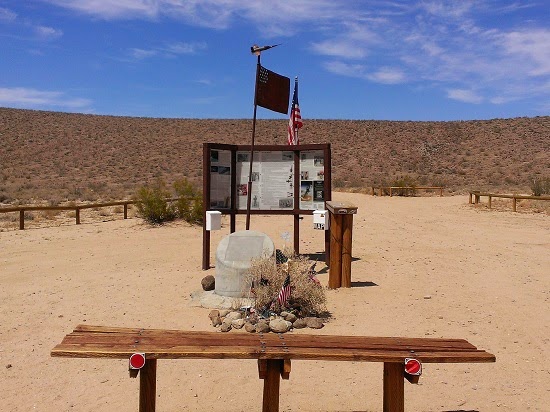
An Eagle Scout in California has reminded all of us about the cost of space travel.  As reported by Parabolic Arc, X-15 rocket plane pilot Maj. Michael J. Adams died in a crash back in 1967 while learning more about suborbital landings that would eventually be very useful for the space shuttle flights.  In June 2004, Eagle Scout John Bodylski from Troop No. 323 in Tustin led a scout team to devise a desert memorial in the Mojave Desert near the X-15 crash site.  The article notes that Maj. Adams was posthumously awarded Astronaut Wings for his final flight and his name was added to the Astronaut Memorial at the John F. Kennedy Space Center Visitors Center in Florida in 1991.  A fitting tribute in both locations as we remember the cost of breaking the bonds of Earth. 


Sunday, August 17

Rosetta's Mission to a Comet

Above is an amazing shot of the comet being pursued by the European Space Agency's (ESA) Rosetta spacecraft.  This image was taken earlier this month from about 65 miles away.  After 10 years, the Rosetta mission is finally on target to orbit the comet before landing on it in November of this year.  This will be the first ever landing on a comet and provide all of us with a greater understanding of whether comets seeded life in our solar system. 

You can follow the mission via the ESA website or NASA's Jet Propulsion Laboratory.  ESA has also put together a fun story on its website for kids following the mission. 


Image Credits:  ESA/Rosetta/NAVCAM (coment) and ESA (cartoon)

Great Image: Evening Lights on the Gulf Coast

The International Space Station (ISS) serves many future needs as we look to the stars, but it is also a good way to look back at ourselves.  The image above taken earlier this month aboard the ISS is an excellent example:
One of the Expedition 40 crew members aboard the International Space Station photographed this nighttime image showing city lights in at least half a dozen southern states from some 225 miles above the home planet. Lights from areas in the Gulf Coast states of Texas, Louisiana, Mississippi and Alabama, as well as some of the states that border them on the north, are visible.
Image Credit: NASA

Thursday, August 14

Google Now Maps the Moon and Mars

Google Earth has expanded beyond our planet and now provides tours of the Moon and Mars.  For instance, Moon in Google Earth allows you to:

-- Take tours of landing sites, narrated by Apollo astronauts;
-- View 3D models of landed spacecraft;
-- Zoom into 360-degree photos to see astronauts' footprint, and
-- Watch rare TV footage of the Apollo mission.

For example, the image below shows various keys points in the Apollo 11 mission. And should you want to track the activities of the Curiosity Rover on Mars you can do that as well.  All you need to do is download the Google Earth program and choose your location.  The navigation and content is not perfect, but it provides a good sense of where you are accompanied by panoramic images. 

I look forward to more planets and moons in the future.  And with NASA's New Horizons heading towards Pluto, we will soon be able to add dwarf planets to the list. 


Sunday, July 27

Congressional Harassment of SpaceX

Did SpaceX make too many waves trying to save the U.S. taxpayers some space dollars?  It certainly looks that way as congressmen from multiple states tied to the status quo rocket program ask more and more questions of SpaceX, criticizing the firm for an "epidemic of anomalies" in a letter to NASA Administrator Charles Bolden.  It seems the Dragon and Falcon projects make these congressmen nervous.  They write:
In the interest of full disclosure and accountability to the American taxpayer, we request that NASA publicly release all anomalies and mishap information, un-redacted, so that Congress can gain a better understanding of what has occurred and ensure full transparency...Again, because the vehicles in question were funded by American taxpayer dollars, there should be no issue in making this report publicly available.
The only problem is that the Falcon did not involve U.S. taxpayer dollars, not that technicalities like this ever bothered the Congress.  And I cannot help wondering if SpaceX's current lawsuit challenging the Air Force's purchase of Atlas and Delta rockets from a competitor located in the states of these congressmen has anything to do with it.

I would like to think this Congress sees the space program as more than a jobs program, and understands that cheaper rockets and related missions means even more missions for other space priorities.  Then again, this is an election year, so space can wait, again.  Maybe funding space museums should be our new priority since we do not seem to interested in bringing the space program into a new era of competition.  I am sure congressional members with museums in their districts will agree.

Great Image: The Jellyfish Supernova

Okay, that is not the official name, but the supernova labeled SN 1006 (a pretty boring title) looks a lot like a giant floating jellyfish.  The type of strange anomaly the USS Enterprise might investigate, or at least a curious astronomer as far back as 1006 AD.  And speaking of curious astronomers, NASA is on top of this one and has this description:

A new star, likely the brightest supernova in recorded human history, lit up planet Earth's sky in the year 1006 AD. The expanding debris cloud from the stellar explosion, found in the southerly constellation of Lupus, still puts on a cosmic light show across the electromagnetic spectrum. In fact, this composite view includes X-ray data in blue from the Chandra Observatory, optical data in yellowish hues, and radio image data in red. Now known as the SN 1006 supernova remnant, the debris cloud appears to be about 60 light-years across and is understood to represent the remains of a white dwarf star. Part of a binary star system, the compact white dwarf gradually captured material from its companion star. The buildup in mass finally triggered a thermonuclear explosion that destroyed the dwarf star. Because the distance to the supernova remnant is about 7,000 light-years, that explosion actually happened 7,000 years before the light reached Earth in 1006. Shockwaves in the remnant accelerate particles to extreme energies and are thought to be a source of the mysterious cosmic rays.

Image Credit: NASA, ESA, Zolt Levay (STScI)

Thursday, July 24

Varying Religious Views on Space Travel

"I do believe there can’t be other intelligent beings in outer space because of the meaning of the gospel,”states Ken Ham, president and founder of the creationist organization Answers in Genesis.  According to the news coverage of Mr. Ham's remarks, any space aliens are going to hell.

I will admit it is not the most enlightened view, but the religious community has a variety of opinions on this matter.  For example, Pope Francis is a little more open-minded about the issue, and even seeks to add aliens to his flock.  A Vatican Radio story noted the Pope would baptize anyone coming to the church, with the Pope noting the Church needs to move "beyond the limits, go ever forward." 

In other news, the General Authority of Islamic Affairs & Endowments (GAIAE) in the United Arab Emirates, issued a fatwa warning Muslims against a Mars mission.  The fatwa was primarily aimed at the Mars One mission, where individuals are not expected to return from Mars.  In this sense, GAIAE is equating the mission to suicide.  Luckily, Muslims in general have been more favorable to space exploration, going as far as creating a guidebook for Muslims working on the International Space Station. 

Wednesday, July 23

Interesting Facts About the Apollo 11 Moon Landing

For the 40th anniversary of the Moon landing, Popular Science magazine published an article "Ten Things You Didn't Know About the Apollo 11 Moon Landing."  The stories are taken from Craig Nelson's book Rocket Men.  They bear mentioning again five years later.  You can read all 10 by going to the link (or read the book for even more facts), but here are three of my favorites:

-- The "one small step for man" wasn't actually that small. Armstrong set the ship down so gently that its shock absorbers didn't compress. He had to hop 3.5 feet from the Eagle's ladder to the surface.

-- When Buzz Aldrin joined Armstrong on the surface, he had to make sure not to lock the Eagle's door because there was no outer handle.

-- The toughest moonwalk task? Planting the flag. NASA's studies suggested that the lunar soil was soft, but Armstrong and Aldrin found the surface to be a thin wisp of dust over hard rock. They managed to drive the flagpole a few inches into the ground and film it for broadcast, and then took care not to accidentally knock it over.

I imagine the Moon missions would have ended that day if the astronauts had locked themselves outside of the capsule.  Many, many other little things had to go right for that mission and those that followed.  The Apollo missions represent the true triumph of the human spirit, and ingenuity as well.

Tuesday, July 22

A Talk with Freeman Dyson

The Institute of Electrical and Electronics Engineers (IEEE) posted an insightful interview with well-known physicist Freeman Dyson covering various topics, including finding alien life and humans in space. 

In terms of alien life, he says we are probably focusing on the wrong targets if we look primarily at planets and ignore the more voluminous parts of space that may harbor life, from asteroids to comments.  As far as humans in space, he does not see a human space colony for at least 100 years. 

Check out this link for the full interview.

Sunday, July 20

45th Moon Landing Anniversary

Forty-five years ago this very day the Apollo 11 crew landed on the Moon and astronaut Neil Armstrong stated "One small step for man, one giant leap for mankind." Astronauts Neil Armstrong and Buzz Aldrin visited the Moon's surface for about 22 hours before returning the the command module, where astronaut Michael Collins was waiting for them. The picture above is pretty dramatic, yet the world first saw the mission on television via the poor-quality video shown below.  NASA has restored the video showing about two and a half hours "extravehicular activity."  This was a amazing day in history, and hopefully we will have many more space moments in the future.  We have not returned to the Moon since 1972.  It may be time to revisit the Moon as part of plans to move further out into the solar system.

Saturday, July 19

Big Holes in the Earth, Including Russia

With all the talk about the new 100 foot diameter hole appearing in the Yamal Peninsula in northern Siberia, one would assume that (1) climate change is a new concept and (2) holes in the Earth are unusual.  In terms of the first point, I am not sure why we are surprised that a northern Russian region with permafrost may experience some settling and melting as areas on the Earth continue to warm. 

And as far as holes go, I am much more concerned about sink holes appearing in populated areas, such as the hole below in Guatemala City formed in June 2010 after Tropical Storm Agatha.
And how about man-made holes?  The hole below is a more amazing image as it sits at the edge of a city.  This hole is found in the Siberian town of Mirny, though this one is a man-made diamond mine about 3,900 feet in diameter.  The air space is closed above the Mirny mine since it is known to modify the air temperature in such a way that is can suck in aircraft (as it did with a helicopter years back).  Now that is scary.