Saturday, August 30

60 Minutes: Atacama Large Millimeter/Submillimeter Array

Earlier this summer 60 Minutes re-aired a nice segment on the Atacama Large Millimeter/submillimeter Array (ALMA) located in Chile.  The show, titled ALMA: Peering into the Universe's Past, discussed the role of this $1.3 billion radio telescope in finding stars and planets as they are being born.  It is worth watching the show and learning that 19 countries are funding this science, which is a very positive sign in this time of shrinking budgets and fewer large projects. 

On particularly interesting exchange between Bob Simon and a scientist related to what the earlier residents of Chile saw in the sky:
The scientists at ALMA aren't the first people to gaze at the skies from this desert. For generations, the indigenous people of the Atacama were fascinated, not by the brilliance of the stars, but by the very same dark corners of space. Chilean physicist Eduardo Hardy, ALMA's director of North American Operations showed us how they saw the universe.
Eduardo Hardy: They saw the equivalent of constellations. But instead of looking at stars to draw the shapes of the constellations, they used the dark patches to do that.
Bob Simon: The Greeks used the stars.
Eduardo Hardy: The Greek used the stars. The local populations used the dark patches, which is precisely what ALMA is looking at.
And in these dark patches, they saw reflections of their daily lives...llamas, for example. They spun a whole mythology around them.
Sounds like a terrific nighttime view when it is the dark patches that are the oddity rather than the stars and galaxies. 

You can find more on ALMA at this site. You can also read about earlier findings, such as the presence of carbon monoxide in a nearby solar system that may relate to planetary or comet collisions.


Image Credit:  60 Minutes (top image) and NASA's Goddard Space Flight Center/ Aki Roberge (bottom image).

Friday, August 29

Russian Rocket Problems

SpaceX wasn't the only space company with rocket issues last week.  The French company Arianespace's launch from South America was unable place to two Galileo satellites into proper orbit after the failure of a Russian-made Soyuz rocket.  The 30 planned Galileo satellites are part of the Europe Union's effort to duplicate America's GPS satellites and obtain some independence from the US system. The two satellites would have been the fifth and sixth satellites in the new system.  Two more satellites were to be launched in December using the same Russian rocket, though this launch will most likely be on hold until after a full investigation of this incident.  It is also possible that these two errant satellites can still be used in some way to support the system. 

Sunday, August 24

A Misfire for Space X

SpaceX defines its Falcon 9 as "a two-stage rocket designed and manufactured by SpaceX for the reliable and safe transport of satellites and the Dragon spacecraft into orbit."  That was not the case on Friday when a Falcon 9 rocket exploded shortly after taking off from the company's McGregor, Texas, flight facility.  CBS News reported this explanation from SpaceX:

Earlier today, in McGregor, Texas, SpaceX conducted a test flight of a three-engine version of the F9R test vehicle (successor to Grasshopper)...During the flight, an anomaly was detected in the vehicle and the flight termination system automatically terminated the mission...Throughout the test and subsequent flight termination, the vehicle remained in the designated flight area. There were no injuries or near injuries. An FAA representative was present at all times.

The Falcon 9 is scheduled to launch the Dragon with another set of supplies to the International Space Station on September 19th.  There is no reason to believe this test of a new system will impact the planned launch for NASA.  I should add that SpaceX has plenty of good news to report, as reported in the press releases on its website earlier today (see below), and yet is strangely silent on this latest incident. 

  • August 6:  SpaceX Launches Asiasat 8 Telecommunications Satellite to GTO
  • July 31:  SpaceX Launches 3D-Printed Part to Space, Creates Printed Engine Chamber
  • July 14:  Falcon 9 Launches ORBCOMM OG2 Satellites to Orbit

 NASA and others did not get where they are without costly losses.  This is part of the process. Let's just hope Congress understands this as well.

Update: SpaceX was back in business on September 7 with the successful launch of an AsiaSat 6 communications satellite from Cape Canaveral.

Wednesday, August 20

An Early Loss in the Space Program

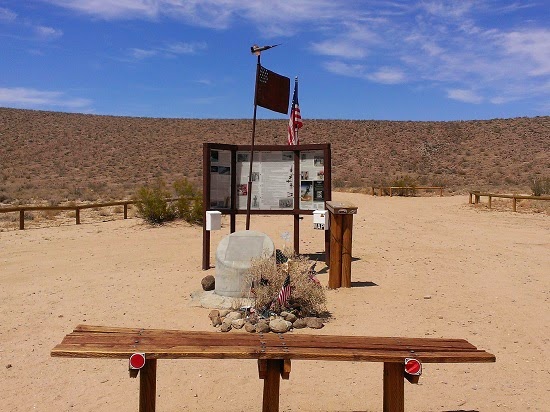
An Eagle Scout in California has reminded all of us about the cost of space travel.  As reported by Parabolic Arc, X-15 rocket plane pilot Maj. Michael J. Adams died in a crash back in 1967 while learning more about suborbital landings that would eventually be very useful for the space shuttle flights.  In June 2004, Eagle Scout John Bodylski from Troop No. 323 in Tustin led a scout team to devise a desert memorial in the Mojave Desert near the X-15 crash site.  The article notes that Maj. Adams was posthumously awarded Astronaut Wings for his final flight and his name was added to the Astronaut Memorial at the John F. Kennedy Space Center Visitors Center in Florida in 1991.  A fitting tribute in both locations as we remember the cost of breaking the bonds of Earth. 


Sunday, August 17

Rosetta's Mission to a Comet

Above is an amazing shot of the comet being pursued by the European Space Agency's (ESA) Rosetta spacecraft.  This image was taken earlier this month from about 65 miles away.  After 10 years, the Rosetta mission is finally on target to orbit the comet before landing on it in November of this year.  This will be the first ever landing on a comet and provide all of us with a greater understanding of whether comets seeded life in our solar system. 

You can follow the mission via the ESA website or NASA's Jet Propulsion Laboratory.  ESA has also put together a fun story on its website for kids following the mission. 


Image Credits:  ESA/Rosetta/NAVCAM (coment) and ESA (cartoon)

Great Image: Evening Lights on the Gulf Coast

The International Space Station (ISS) serves many future needs as we look to the stars, but it is also a good way to look back at ourselves.  The image above taken earlier this month aboard the ISS is an excellent example:
One of the Expedition 40 crew members aboard the International Space Station photographed this nighttime image showing city lights in at least half a dozen southern states from some 225 miles above the home planet. Lights from areas in the Gulf Coast states of Texas, Louisiana, Mississippi and Alabama, as well as some of the states that border them on the north, are visible.
Image Credit: NASA

Thursday, August 14

Google Now Maps the Moon and Mars

Google Earth has expanded beyond our planet and now provides tours of the Moon and Mars.  For instance, Moon in Google Earth allows you to:

-- Take tours of landing sites, narrated by Apollo astronauts;
-- View 3D models of landed spacecraft;
-- Zoom into 360-degree photos to see astronauts' footprint, and
-- Watch rare TV footage of the Apollo mission.

For example, the image below shows various keys points in the Apollo 11 mission. And should you want to track the activities of the Curiosity Rover on Mars you can do that as well.  All you need to do is download the Google Earth program and choose your location.  The navigation and content is not perfect, but it provides a good sense of where you are accompanied by panoramic images. 

I look forward to more planets and moons in the future.  And with NASA's New Horizons heading towards Pluto, we will soon be able to add dwarf planets to the list. 


Sunday, July 27

Congressional Harassment of SpaceX

Did SpaceX make too many waves trying to save the U.S. taxpayers some space dollars?  It certainly looks that way as congressmen from multiple states tied to the status quo rocket program ask more and more questions of SpaceX, criticizing the firm for an "epidemic of anomalies" in a letter to NASA Administrator Charles Bolden.  It seems the Dragon and Falcon projects make these congressmen nervous.  They write:
In the interest of full disclosure and accountability to the American taxpayer, we request that NASA publicly release all anomalies and mishap information, un-redacted, so that Congress can gain a better understanding of what has occurred and ensure full transparency...Again, because the vehicles in question were funded by American taxpayer dollars, there should be no issue in making this report publicly available.
The only problem is that the Falcon did not involve U.S. taxpayer dollars, not that technicalities like this ever bothered the Congress.  And I cannot help wondering if SpaceX's current lawsuit challenging the Air Force's purchase of Atlas and Delta rockets from a competitor located in the states of these congressmen has anything to do with it.

I would like to think this Congress sees the space program as more than a jobs program, and understands that cheaper rockets and related missions means even more missions for other space priorities.  Then again, this is an election year, so space can wait, again.  Maybe funding space museums should be our new priority since we do not seem to interested in bringing the space program into a new era of competition.  I am sure congressional members with museums in their districts will agree.

Great Image: The Jellyfish Supernova

Okay, that is not the official name, but the supernova labeled SN 1006 (a pretty boring title) looks a lot like a giant floating jellyfish.  The type of strange anomaly the USS Enterprise might investigate, or at least a curious astronomer as far back as 1006 AD.  And speaking of curious astronomers, NASA is on top of this one and has this description:

A new star, likely the brightest supernova in recorded human history, lit up planet Earth's sky in the year 1006 AD. The expanding debris cloud from the stellar explosion, found in the southerly constellation of Lupus, still puts on a cosmic light show across the electromagnetic spectrum. In fact, this composite view includes X-ray data in blue from the Chandra Observatory, optical data in yellowish hues, and radio image data in red. Now known as the SN 1006 supernova remnant, the debris cloud appears to be about 60 light-years across and is understood to represent the remains of a white dwarf star. Part of a binary star system, the compact white dwarf gradually captured material from its companion star. The buildup in mass finally triggered a thermonuclear explosion that destroyed the dwarf star. Because the distance to the supernova remnant is about 7,000 light-years, that explosion actually happened 7,000 years before the light reached Earth in 1006. Shockwaves in the remnant accelerate particles to extreme energies and are thought to be a source of the mysterious cosmic rays.

Image Credit: NASA, ESA, Zolt Levay (STScI)

Thursday, July 24

Varying Religious Views on Space Travel

"I do believe there can’t be other intelligent beings in outer space because of the meaning of the gospel,”states Ken Ham, president and founder of the creationist organization Answers in Genesis.  According to the news coverage of Mr. Ham's remarks, any space aliens are going to hell.

I will admit it is not the most enlightened view, but the religious community has a variety of opinions on this matter.  For example, Pope Francis is a little more open-minded about the issue, and even seeks to add aliens to his flock.  A Vatican Radio story noted the Pope would baptize anyone coming to the church, with the Pope noting the Church needs to move "beyond the limits, go ever forward." 

In other news, the General Authority of Islamic Affairs & Endowments (GAIAE) in the United Arab Emirates, issued a fatwa warning Muslims against a Mars mission.  The fatwa was primarily aimed at the Mars One mission, where individuals are not expected to return from Mars.  In this sense, GAIAE is equating the mission to suicide.  Luckily, Muslims in general have been more favorable to space exploration, going as far as creating a guidebook for Muslims working on the International Space Station. 

Wednesday, July 23

Interesting Facts About the Apollo 11 Moon Landing

For the 40th anniversary of the Moon landing, Popular Science magazine published an article "Ten Things You Didn't Know About the Apollo 11 Moon Landing."  The stories are taken from Craig Nelson's book Rocket Men.  They bear mentioning again five years later.  You can read all 10 by going to the link (or read the book for even more facts), but here are three of my favorites:

-- The "one small step for man" wasn't actually that small. Armstrong set the ship down so gently that its shock absorbers didn't compress. He had to hop 3.5 feet from the Eagle's ladder to the surface.

-- When Buzz Aldrin joined Armstrong on the surface, he had to make sure not to lock the Eagle's door because there was no outer handle.

-- The toughest moonwalk task? Planting the flag. NASA's studies suggested that the lunar soil was soft, but Armstrong and Aldrin found the surface to be a thin wisp of dust over hard rock. They managed to drive the flagpole a few inches into the ground and film it for broadcast, and then took care not to accidentally knock it over.

I imagine the Moon missions would have ended that day if the astronauts had locked themselves outside of the capsule.  Many, many other little things had to go right for that mission and those that followed.  The Apollo missions represent the true triumph of the human spirit, and ingenuity as well.

Tuesday, July 22

A Talk with Freeman Dyson

The Institute of Electrical and Electronics Engineers (IEEE) posted an insightful interview with well-known physicist Freeman Dyson covering various topics, including finding alien life and humans in space. 

In terms of alien life, he says we are probably focusing on the wrong targets if we look primarily at planets and ignore the more voluminous parts of space that may harbor life, from asteroids to comments.  As far as humans in space, he does not see a human space colony for at least 100 years. 

Check out this link for the full interview.

Sunday, July 20

45th Moon Landing Anniversary

Forty-five years ago this very day the Apollo 11 crew landed on the Moon and astronaut Neil Armstrong stated "One small step for man, one giant leap for mankind." Astronauts Neil Armstrong and Buzz Aldrin visited the Moon's surface for about 22 hours before returning the the command module, where astronaut Michael Collins was waiting for them. The picture above is pretty dramatic, yet the world first saw the mission on television via the poor-quality video shown below.  NASA has restored the video showing about two and a half hours "extravehicular activity."  This was a amazing day in history, and hopefully we will have many more space moments in the future.  We have not returned to the Moon since 1972.  It may be time to revisit the Moon as part of plans to move further out into the solar system.

Saturday, July 19

Big Holes in the Earth, Including Russia

With all the talk about the new 100 foot diameter hole appearing in the Yamal Peninsula in northern Siberia, one would assume that (1) climate change is a new concept and (2) holes in the Earth are unusual.  In terms of the first point, I am not sure why we are surprised that a northern Russian region with permafrost may experience some settling and melting as areas on the Earth continue to warm. 

And as far as holes go, I am much more concerned about sink holes appearing in populated areas, such as the hole below in Guatemala City formed in June 2010 after Tropical Storm Agatha.
And how about man-made holes?  The hole below is a more amazing image as it sits at the edge of a city.  This hole is found in the Siberian town of Mirny, though this one is a man-made diamond mine about 3,900 feet in diameter.  The air space is closed above the Mirny mine since it is known to modify the air temperature in such a way that is can suck in aircraft (as it did with a helicopter years back).  Now that is scary.

Thursday, July 17

Cygnus a Success

The International Space Station (ISS) crew welcomed the Cygnus spacecraft yesterday as it resupplies the station with a variety of items, including spacewalking equipment, Earth-imaging nanosatellites, and hardware to  allow free-flying robots to conduct 3-D mapping inside the station. Nanosatelites?  Free-floating robots?  The ISS appears to be an experiment base for the next phase of the space program, which sounds like a very useful role.

This private space launch by Orbital Sciences represents the second successful mission by this company in addition to the multiple successful missions by SpaceX's Dragon spacecraft.  All of this fares well for a nation that wants to become more independent of the Russians and fill in a gap left by the previous Space Shuttle missions.

Wednesday, July 9

A Cloud City on Venus?

While most eyes are on Mars and the Moon for future settlements, some people are talking about Venus as another good location for human colonization.  A recent Citylab story noted the following:

The second planet from the Sun might seem like a nasty place to build a home, with a surface temperature hot enough to melt lead and an atmosphere so dense it would feel like being submerged beneath 3000 feet of water. But the air on Venus thins out as you rise above the surface and cools considerably; about 30 miles up you hit the sweet spot for human habitation: Mediterranean temperatures and sea-level barometric pressure. If ever there were a place to build a floating city, this would be it.
Some of this conversation stems from a 2003 NASA paper by Geoffrey A. Landis titled "Colonization of Venus,"  where he stated:
 At cloud-top level, Venus is the paradise planet...at an altitude slightly above fifty km above the surface, the atmospheric pressure is equal to the Earth surface atmospheric pressure of I Bar. At this level, the environment of Venus is benign.
 - above the clouds, there is abundant solar energy 

- temperature is in the habitable "liquid water" range of 0-5OC 

- atmosphere contains the primary volatiles required for life (Carbon, Hydrogen, Oxygen, Nitrogen, and Sulfur)

- Gravity is 90% of the gravity at the surface of Earth. 

While the atmosphere contains droplets of sulfuric acid, technology to avoid acid corrosion are well known, and have been used by chemists for centuries.

In short, the atmosphere of Venus is most earthlike environment in the solar system. Although humans cannot breathe the atmosphere, pressure vessels are not required to maintain one atmosphere of habitat pressure,and pressure suits are not required for humans outside the habitat.
This is certainly an interesting idea, as is the idea of living on asteroids and other areas.  Of course, we are still trying to see if we can support a return trip to the Moon, so funding may be limited for extraterrestrial city-building for some time.  However, big dreams never hurt and may stimulate more creative and productive thinking about our future in the solar system. 

TV: Houston, We Have A Growing Problem

If you are looking for something different to take your mind off of NASA's funding woes, you might enjoy an evening of television entertainment from CBS.  Tonight you can watch the premiere of the new series produced by Steven Spielberg titled Extant, where Halle Berry plays a returning astronaut from a solo space station mission.  But she has a secret, and its not the fact that she has a robotic son.  That's the normal part.  The problem is that she is also mysteriously pregnant.  Here is a trailer if you want to see more.  It is not Gravity, but we have to take what we can get in this summer season. 

Monday, June 30

Interview with Dr. Stephen Hawking

For some light entertainment, you may want to view John Oliver's interview with Dr. Stephen Hawking as the discuss time travel, artificial intelligence, and parallel universes.  Dr. Hawking proves he has a sense of humor though all of it.  The HBO show is called Last Week Tonight, and the series is called Great Minds: People Who Think Good

Dr. Hawking has spoken on artificial intelligence in other more serious forums and provides us with a pretty dire warning.  In The Independent, Dr. Hawking wrote:
One can imagine such technology outsmarting financial markets, out-inventing human researchers, out-manipulating human leaders, and developing weapons we cannot even understand. Whereas the short-term impact of AI depends on who controls it, the long-term impact depends on whether it can be controlled at all.
Something to ponder as we rush headlong into the future.

Sunday, June 22

Questions About NASA's Budget Plans

Phil Plait had a good article in Slate earlier this week that questions NASA's reliance on the planned Space Launch System (SLS), noting it may be a drag on entire space program, enrich large contractors over smaller, more nimble competitors (e.g., SpaceX), and keep us on a path that relies on the Russians for entry into space.  Not a very good series of events.  He notes, 
Bottom line: [Senator] Shelby’s addition makes it easier for SLS to get built, and harder for commercial companies to build their own vehicles to send humans into space (and, importantly, can do it far, far cheaper than SLS can). That means we’ll have to rely on the Russians more for the time being. That’s something we really, really need to stop doing. They’re gouging us for rides to space, and their political situation isn’t exactly the most conducive for us right now...And worst of all, we still don’t have a clear and sustained purpose for SLS. Our government wants to spend billions upon billions of dollars on a rocket for no defined reason. It’s maddening
This is what you get when you run a space program via a committee of 535 politicians who are more interested in the jobs for their districts than the overall benefits for mankind.  Maybe the silver lining concerning tensions with Russia is that we start to think of competing in space again.  That seemed to get us to the moon, and it may be necessary to get us to Mars.

Saturday, June 21

The Returning Ghost Ship

If you recall the first Star Trek movie in 1979, a returning spacecraft caused quite a bit of carnage on its way back to Earth.  In that case it was V'GER, but we are now faced with a real returning spacecraft from many years ago called ISEE.  It sound as mysterious, if not all-knowing, but we have this one figured out from the start.

The International Sun-Earth Explorer-3 (ISEE-3) was launched back in 1978, one year before the Star
Trek movie, to study solar winds.  It was later re-purposed as the International Cometary Explorer (ICE) to study the plasma tail of Comet Giacobini-Zinner on September 11, 1985.  The spacecraft was decommissioned in May 1997 and NASA lost the ability to communicate with the spacecraft in 1999.  But now it is back, and the rest of the story involves space piracy, a McDonald's restaurant, and a company called Skycorp that sounds a lot like a company from the movie Terminator (and we know how that ended for everyone). 


ISEE-3/ICE is approaching the Earth and a few private scientists have asked NASA for permission to communicate with the spacecraft one last time using funds obtained through crowd-funding.  The scientists hope to reorient the spacecraft so it can conduct more solar wind work.  The whole story and cast of characters was well-told in a New York Times article last Sunday.  It's quite a tale and we can only hope ISEE-3/ICE is a little less confused than V-GER as it approaches Earth. 

Update:  The attempt to restart the spacecraft failed earlier this month.  The team stated, "...we think there is a chance that the Nitrogen used as a pressuring for the monopropellant Hydrazine propulsion system may have been depleted."  However, the team is not giving up.  They believe they can heat up the fuel tank to free up the required Nitrogen.  Stay tuned.