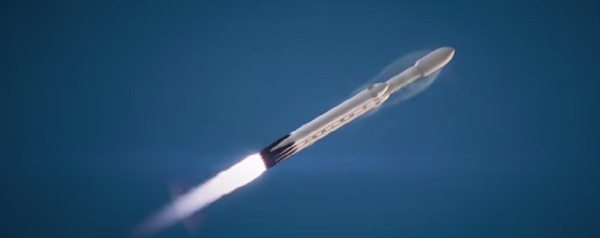
Showing posts with label SpaceX. Show all posts

Monday, October 10

Musk May Be Our Only Hope for Mars

I was reading a piece in ARS Technica about the potential pivot of a Clinton administration back to the Moon rather than Mars.  Physicist Neal Lane, who was a science advisor to Bill Clinton and may informally advising Hillary, recently stated:
We’ve been to the Moon but we didn’t stay very long...So the US really ought to consider, in my view, leading international expeditions back to the Moon and to other bodies in the Solar System, and perhaps eventually Mars, and work[ing] with other countries to ensure free access to space. I think the new president could find this to be a real opportunity for leadership.
This is somewhat disappointing, though we already have an administration that chose an asteroid over the Moon and Mars.  I was hoping we could do both the Moon and Mars between NASA and the private sector.

SpaceX's Elon Musk provided a better vision the other week with his mission to Mars.  Maybe the private sector needs to take on Mars with NASA stays local (a reverse of expected roles, but an increasingly plausible scenario).

Boeing appears to agree, and seems to be calling for a private sector space race.  Boeing's Chief Executive Officer Dennis Muilenburg made the following statement at a Chicago meeting:
I’m convinced the first person to step foot on Mars will arrive there riding a Boeing rocket.
Boeing may be more tied to NASA's apron than Musk, but both will need the support of NASA to make it to Mars. 

Let the space race begin!

Tuesday, October 4

Nye Will Not Pay $200,00 for a Barren Rock

“I’m open-minded but skeptical that anyone actually wants to live out his or her life on Mars any more than anyone wants to colonize Antarctica...Mars is an exotic place and in some ways very romantic. But it’s cold, barren and you can’t even breathe.”

--Bill NYE the Science Guy, head of The Planetary Society, discussing SpaceX's plan to settle Mars in the near future at a cost of about $200,00 per passenger, as quoted in the Huffington Post.

Sunday, October 2

New Questions about the SpaceX Explosion

I was surprised to read a Washington Post piece stating the United Launch Alliance (UAL) was part of the investigation surrounding the September 1st Falcon rocket explosion 

The article, titled "Implication of Sabotage Adds Intrigue to SpaceX Investigation," stated investigators wanted access to a UAL facility:
As part of the investigation, SpaceX officials had come across something suspicious they wanted to check out, according to three industry officials with knowledge of the episode. SpaceX had still images from video that appeared to show an odd shadow, then a white spot on the roof of a nearby building belonging to ULA, a joint venture between Lockheed Martin and Boeing.
The piece also notes the ongoing rivalry between the firms. 

This is very odd, but hopefully just the results of a very wide investigation rather than real suspicions about a competitor.  We have enough issues with foreign spying and competition without any issues stateside.

One can understand frustration at UAL given SpaceX's rise, as noted in this story from April: 
United Launch Alliance plans to cut up to 875 jobs, or about one-quarter of its workforce, before the end of 2017 to better compete against rivals bankrolled by billionaire entrepreneurs including Elon Musk and Jeff Bezos, ULA's chief executive said on Thursday.
That said, we still need to see this as an American initiative if not an Earth initiative as we plans for a trip to Mars.  I expect all the competitors understand this and will play by the rules.   

Wednesday, September 14

Blue Origin Joins the Big League

It wasn't long ago Elon Musk was laughing about Blue Origin's successful return of the New Shepard reusable rocket because it was suborbital. Well, Elon, you may not be laughing now that Blue Origins is planning to go head-to-head with the United Launch Alliance and SpaceX by building its own heavy-lift rocket for major off-Earth missions.

The New Glenn rocket (playing on an astronaut's name again) at 313 feet will be almost as large of the workhorse Saturn V rocket at 363 feet, and pack quite a punch with multiple BE-4 engines.

Jeffrey Bezos is certainly looking towards a future beyond space tourism, stating: 
New Glenn is designed to launch commercial satellites and to fly humans into space...The three-stage variant—with its high specific impulse hydrogen upper stage—is capable of flying demanding beyond-LEO missions.
Of course, Mr. Bezos could still work with tourists, but now they can go to the Moon or Mars for a vacation.  This is a very big deal that shuffles the cards again in the private space industry.

Sunday, September 11

SpaceX: Keep Pushing the Limits

"Despair is always the wrong response to a failure during exploration and it isn’t disciplined engineering. When the entire crew of Apollo was burned alive in a capsule test, President Johnson pushed our moon mission forward and engineers delivered. When Space Shuttle Challenger exploded, President Reagan proudly redoubled our commitment to space, we fixed the launch system and we built a great space station. When Columbia broke up on reentry we engineered work arounds and completed the Space Shuttle program with pride. Once again, America’s brightest engineers will collect the data, analyze the failure, improve the system and move us forward into the future."

--Statement by Greg Autry, Assistant Professor with The Lloyd Greif Center for Entrepreneurial Studies in the Marshall School of Business at the University of Southern California, in a Space News editorial.

SpaceX Leads Investigation of Rocket Explosion

It appears SpaceX will take the lead on the investigation of the Falcon 9 explosion on September 1, though NASA, the Air Force, the Federal Aviation Administration, and others will participate.  The fact that this was a commercial operation allows SpaceX to stay in the lead.  You may recall that last year's explosion involving a NASA mission was also investigated by SpaceX, much to the consternation of some in Congress

Elon Musk has a lot on his hands these days.  After so much praise earlier this summer, the explosion has set him back at a time he is struggling with cash problems at Telsa and SolarCity.  And even though the satellite destroyed in the recent explosion was insured, SpaceX may still need to pay another $50 million to satellite owner Space Communication Ltd. 

Even given such bleak news, SpaceX still remains an enormously innovative and successful company suffering some growing pains but still very much on the right track.  And such incidents are unlikely to shake the industry's faith in greater diversification of vendors, thought insurance rates are certain to go up.  In addition, some companies may start to wonder about the advantage of cheaper launches given the increased risk.  This can only help the industry stalwart United Launch Alliance.

The investigation should tell us more about whether this was a fluke or a design problem.  On Friday, Mr. Musk tweeted:
Still working on the Falcon fireball investigation. Turning out to be the most difficult and complex failure we have ever had in 14 years.

Saturday, September 3

SpaceX Statement on Rocket Explosion

SpaceX released this statement yesterday regarding Thursday's rocket explosion in Florida:
SpaceX has begun the careful and deliberate process of understanding the causes and fixes for yesterday's incident.  We will continue to provide regular updates on our progress and findings, to the fullest extent we can share publicly.
We deeply regret the loss of AMOS-6, and safely and reliably returning to flight to meet the demands of our customers is our chief priority.  SpaceX's business is robust, with approximately 70 missions on our manifest worth over $10 billion.  In the aftermath of yesterday's events, we are grateful for the continued support and unwavering confidence that our commercial customers as well as NASA and the United States Air Force have placed in us.
Overview of the incident:
 - Yesterday, at SpaceX's Launch Complex 40 at Cape Canaveral Air Force Station, an anomaly took place about eight minutes in advance of a scheduled test firing of a Falcon 9 rocket. 
- The anomaly on the pad resulted in the loss of the vehicle.
This was part of a standard pre-launch static fire to demonstrate the health of the vehicle prior to an eventual launch. 
- At the time of the loss, the launch vehicle was vertical and in the process of being fueled for the test.  At this time, the data indicates the anomaly originated around the upper stage liquid oxygen tank.  Per standard operating procedure, all personnel were clear of the pad.  There were no injuries.
To identify the root cause of the anomaly, SpaceX began its investigation immediately after the loss, consistent with accident investigation plans prepared for such a contingency.  These plans include the preservation of all possible evidence and the assembly of an Accident Investigation Team, with oversight by the Federal Aviation Administration and participation by NASA, the United States Air Force and other industry experts.  We are currently in the early process of reviewing approximately 3000 channels of telemetry and video data covering a time period of just 35-55 milliseconds. 
As for the Launch Pad itself, our teams are now investigating the status of SLC-40.  The pad clearly incurred damage, but the scope has yet to be fully determined.  We will share more data as it becomes available.  SpaceX currently operates 3 launch pads – 2 in Florida and 1 in California at Vandenberg Air Force Base.  SpaceX's other launch sites were not affected by yesterday's events.  Space Launch Complex 4E at Vandenberg Air Force Base is in the final stages of an operational upgrade and Launch Complex 39A at Kennedy Space Center remains on schedule to be operational in November.  Both pads are capable of supporting Falcon 9 and Falcon Heavy launches.  We are confident the two launch pads can support our return to flight and fulfill our upcoming manifest needs.
Again, our number one priority is to safely and reliably return to flight for our customers, as well as to take all the necessary steps to ensure the highest possible levels of safety for future crewed missions with the Falcon 9. We will carefully and thoroughly investigate and address this issue.

Thursday, September 1

SpaceX Rocket Explodes

Bad news for SpaceX and therefore NASA - a Falcon rocket exploded in Florida earlier today in preparation for a commercial satellite launch this weekend. Luckily, no one was hurt, but the rocket and satellite were destroyed. 

I am sure we will learn much more in the days to come. 

Update:  Mark Zuckerberg is not happy he just lost a $200 million Israeli satellite that was to assist Africa with the Internet.  On his Facebook page he stated:
As I'm here in Africa, I'm deeply disappointed to hear that SpaceX's launch failure destroyed our satellite that would have provided connectivity to so many entrepreneurs and everyone else across the continent.
Fortunately, we have developed other technologies like Aquila that will connect people as well. We remain committed to our mission of connecting everyone, and we will keep working until everyone has the opportunities this satellite would have provided.

Tuesday, July 19

SpaceX Lands the Falcon Again

Yesterday morning SpaceX had another successful landing following the launch of the CRS-9 mission aboard the Dragon to the International Space Station.  The Falcon 9 rocket successfully returned to Cape Canaveral and landed back onto the launch pad.  You can see the video here.  An impressive feat no matter how many times you see it. 

The image above shows both the launching and landing of the Falcon 9 in one image.  The credit for that shot goes to Ken Kremer at kenkremer.com.  

Wednesday, May 4

SpaceX Aims for Mars

It wasn't too long ago NASA stated it would leave Low Earth Orbit (LEO) missions for the private sector while the space agency would take on the bigger tasks off Earth.

I guess Elon Musk never received the memo because he is gunning for Mars (while also doing quite well with LEO having just won a USAF contract).

Here are a few messages about his new Dragon 2 capsule, also labeled the Red Dragon, that he hopes to land on Mars in 2018.
 
 
Planning to send Dragon to Mars as soon as 2018. Red Dragons will inform overall Mars architecture, details to come 
Dragon 2 is designed to be able to land anywhere in the solar system. Red Dragon Mars mission is the first test flight.
I don't want to be someone who bets against Mr. Musk and I hope can make it happen as the race for the Red Planet continues. Unfortunately, it seems the Europeans and Russians are delaying their ExoMars mission until 2020, so the field is open for SpaceX yet the path is still perilous.

Friday, April 8

SpaceX: Success!

SpaceX has done it!  Earlier today the space company's Falcon 9 rocket successfully landed on a drone platform off the coast of Florida following a successful launch of a Dragon cargo ship towards the International Space Station. Long-awaited good news for all. 

President Obama was also impressed, tweeting:
Congrats SpaceX on landing a rocket at sea. It's because of innovators like you & NASA that America continues to lead in space exploration.
Update:  The Dragon cargo ship safely arrived at the International Space Station yesterday (April 10th).  One of the items delivered is BEAM, or the Bigelow Expandable Activity Module, which will serve as inflatable space habitat attached to the station.

Monday, April 4

International Space Station Traffic Jam

Things are getting busy up there in low Earth orbit.  The other week Orbital ATK sent up a Cygnus cargoship.  And then Russian resupply ship Progress 63 (animation shown above) was launched from the Baikonur Cosmodrome in Kazakhstan on March 31st.  Progress 61 had to undock and depart to make way for Progress 63. 

And now SpaceX is preparing for another Dragon resupply run on April 8th with a crew of mice to see how their little bodies handle space.  The mice will later be dissected and sent back to Earth for further study.  Scott Kelly did a little better than that with his mission. 

It is nice to see this complex interchange becoming so routine with the private sector playing a growing role.  A good sign for future cooperation and space projects. 

Thursday, March 3

SpaceX: The Company Can't Get It Up

Maybe tomorrow will be the day. SpaceX has already scrubbed an SES-9 communications satellite launch four times now for various reasons, according to Spacenews:

- First scrub - liquid propellant issue;
- Second scrub - liquid propellant again;
- Third scrub - a boat strayed into the launch area; and 
- Fourth scrub - high winds.

SpaceX has already delayed this launch from last fall, so it needs to prove it can deliver quality launches on time. It seems the delays relate more to future SpaceX plans - reusable rockets - rather than current needs. 

NextGov noted that the super-cooled fuel was an essential part of obtaining sufficient density for the Falcon 9 rockets to return after placing their payload. It's the very technology that promises future benefits that is frustrating customers today.

I expect the current customers can wait a few days. The next launch could occur as early as tomorrow. Yet I also bet Mr. Musk is biting his nails and rethinking his options going forward.

Update: The good news is that the fifth launch attempt on Friday was successful. The satellite is up. The bad news is that the returning rocket did not successfully land on the drone barge.

Wednesday, January 27

Good News Continues for SpaceX

Even if SpaceX is still struggling with the barge landing of the Falcon 9 rocket, the company continues to rack up good news in terms of future customers.  Here are just a few of the latest stories about government contracts with SpaceX:

-- On January 25h, the US Air Force certified the latest version of the Falcon 9 rocket, the Falcon 9 Upgrade, to launch national security satellites.  The new rocket can lift 30 percent more mass into orbit.

-- On January 14th, SpaceX, Orbital ATK, and Sierra Nevada won NASA contracts to resupply the International Space Station through 2024.  The Commercial Resupply Services (CRS-2) contracts, worth about $14 billion, are for cargo delivery services to the space station and not the transport of astronauts.

-- On January 13th, SpaceX and Orbital ATK were selected by the US Air Force for a $241 million contract for new rocket propulsion systems.  This will help the Air Force end its dependence on the RD-180 rocket from Russia.  

This is a nice string of events for SpaceX and its competitors (unless you are Russia).  The smaller private sector firms are starting to pull their weight in the space race. 

Monday, January 18

Space X: Still Trying to Land on That Barge

The launch and Jason-3 satellite placement was a success, but SpaceX continues to have difficulty landing the Falcon 9 rocket on the barge.  An attempt yesterday met with failure again.  Choppy seas did not help.  I guess landing on a more stable surface, such as the ground at Cape Canaveral, is the trick. 

Here is a little more on the Jason-3 payload: 
Jason-3 is the newest satellite in a series designed to maintain long-term satellite altimetry observations of global sea surface height. These data provide critical ocean information that forecasters need to predict devastating hurricanes and severe weather before they arrive onshore.
Over the long term, Jason-3 will help track global sea level rise, an increasing threat to the resilience of coastal communities and to the health of our environment.
Jason-3’s highly accurate altimetry measurements will be used for a variety of scientific, commercial and operational applications, including:
  • Hurricane intensity forecasting
  • Surface wave forecasting for offshore operators
  • Forecasting tides and currents for commercial shipping and ship routing
  • Coastal forecasting for response to environmental problems like oil spills and harmful algal blooms
  • Coastal modeling crucial for marine mammal and coral reef research
  • El Niño and La Niña forecasting

Thursday, November 26

Blue Origin Success Bugs Musk

Monday was a great day for Blue Origin, a small rocket company funded by Amazon's Jeff Bezos. The firm successfully landed its BE-3 reusable rocket (shown above), something SpaceX has struggled with. The rocket also carried a space capsule, the New Shepard (shown below), 62 miles up before it too successfully landed via parachute.

On its website, Blue Origin stated:
We are building Blue Origin to seed an enduring human presence in space, to help us move beyond this blue planet that is the origin of all we know. We are pursuing this vision patiently, step-by-step. Our fantastic team in Kent, Van Horn and Cape Canaveral is working hard not just to build space vehicles, but to bring closer the day when millions of people can live and work in space.

Blue Origin's plans are to use the rocket and space capsule for space tourism.  However, the firm has joined the United Launch Alliance as they compete against SpaceX for future defense and space missions. 

From the sounds of it, Elon Musk is not impressed. Following the successful landing, he tweeted:
@elonmusk: Jeff maybe unaware SpaceX suborbital VTOL flight began 2013. Orbital water landing 2014. Orbital land landing next. https://t.co/S6WMRnEFY5
Oh well, one could say "boys with their toys," but I think the competition is great for the US space industry. Let's have more of it.

Friday, November 20

ULA Concedes Defeat


It is pretty amazing to see the United Launch Alliance (ULA) walk away from a US Air Force contact, basically handing it over to SpaceX.  The consortium of Lockheed Martin and Boeing admitted they were not prepared for a contract bid.

Explaining ULA's position, CEO Tory Bruno stated
The key elements of reliability and schedule, certainly our most important strengths, are not allowed to be considered to differentiate bidders...It comes down to being a price-only comparison, which takes our biggest strengths off the table.
In other words, ULA cannot compete on price.  ULA also wanted to use Russian rockets, while Congress opposes this option.  

In the past the Pentagon would have handed it to them regardless of such readiness, so this is a win for SpaceX and taxpayers. Let the competition continue.

Saturday, November 7

EXIM: A Space Company?

There has been a lot of talk about EXIM and the space industry, but what does this entity do?  It is actually a bank and arm of government that assists exporters and importers, including those selling U.S. space products to foreign nations. Here is what the EXIM Bank has to say on its website:
Looking to jump-start or expand your foreign sales? EXIM is here to support your business. The Bank is an independent federal agency that fills gaps in private export finance in order to bolster U.S. job growth at no cost to American taxpayers.
EXIM provides trade financing solutions – including export credit insurance, working capital guarantees, and guarantees of commercial loans to foreign buyers – to empower exporters of U.S. goods and services.
You will also find this message on its website: 
Due to a lapse in EXIM Bank’s authority, as of July 1, 2015, the Bank is unable to process applications or engage in new business or other prohibited activities. 
This government agency has been in the news frequently this year because the republicans do not like the idea of helping U.S. exporters because it may stifle competition.  Unfortunately, that competition is already impacted by many other countries offering similar programs, and unilateral disarmament on exports will only hurt our fledgling private sector space industry.

Here is an EXIM press release from August 2013 that demonstrates how the bank assisted SpaceX:
Continuing its support of the space industry in America, the Export-Import Bank of the United States (Ex-Im Bank) has authorized a $105.4 million loan to Space Communication Ltd. of Ramat Gan, Israel, to finance the Space Exploration Technologies (SpaceX) launch of the Amos-6 communications satellite, the purchase of American made-solar arrays, and insurance brokered by Marsh USA (Marsh).
Loan financing is not sexy stuff, but it is essential if our private sector space industry is to become a global industry.  A smart partnership between the government and private industry helps everyone.  Why is this idea lost on many republicans?

The latest highway bill still being debated by Congress provides funding for the bank, so this issue may be resolved shortly.  But for how long?  These empty-headed dances over the funding of government programs has become a continuous distraction for more important business.  "Partnership" and "compromise" are dirty words with this Congress, and the resulting debates and threats are a slow cancer for a nation that hopes to lead the world in any area, including space travel. 

Update:  EXIM is open for business again.  Here is what Fred P. Hochberg, Chairman and President of EXIM, had to say yesterday (December 4, 2015): 
I'm pleased to report that after overwhelmingly bipartisan votes in both the Senate and the House of Representatives, President Obama signed EXIM Bank's reauthorization into law today. 
Beginning today, EXIM will be able to restart the work needed to meet its mission of supporting American jobs and equipping American businesses with the tools necessary to compete for global sales. Importantly, the Bank secured a long-term reauthorization that will be in effect until September 30, 2019.

Exporters and their supply chains are critical to the country's economic health. Export focused businesses bring a host of benefits to their communities and local economies, including generally paying higher wages to their employees than non-export businesses. 

Thursday, October 22

Falcon 9 Returning in December

In December we should see SpaceX's Falcon 9 rocket back on the launch pad blasting two commercial satellites into orbit. This will be about six months after the loss of the Falcon 9/Dragon mission to the International Space Station.

The two missions will allow SpaceX to test the rocket's second stage booster, which was determined to be the location of the June failure. The first commercial satellite launch will not even require the second stage to achieve orbit, so the system can be tested before being used for the next launch. Pretty smart.  

Universe Today has more on the upcoming missions.

Monday, October 5

The Martian: Where Were the Russians?

If you have yet to see the new film The Martian you should ignore this post. But if you have seen the movie, maybe you too wondered about the Chinese assistance to NASA. Having the future Chinese assist with a rescue mission to Mars is not the issue. What I wonder is why the Russians were not consulted since they are far ahead of the Chinese today and would presumably be in the same position in the future.

And what about private ventures such as SpaceX and others? Are we to presume NASA was the only game in town? If so, this is a bleak view of the future.  I won't even mention Mars One (since maybe that mission was already dead on another side of the planet - or still in orbit).

Maybe the book explains these things, but I am hoping the future does not depend on only one or two government programs.