Showing posts with label US Air Force. Show all posts

Wednesday, January 27

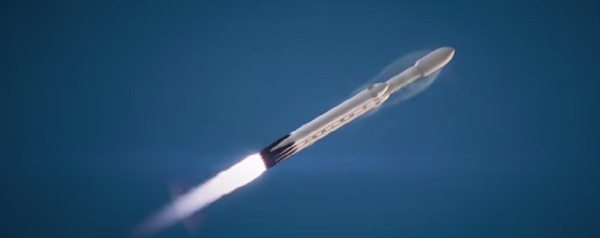
Good News Continues for SpaceX

Even if SpaceX is still struggling with the barge landing of the Falcon 9 rocket, the company continues to rack up good news in terms of future customers.  Here are just a few of the latest stories about government contracts with SpaceX:

-- On January 25h, the US Air Force certified the latest version of the Falcon 9 rocket, the Falcon 9 Upgrade, to launch national security satellites.  The new rocket can lift 30 percent more mass into orbit.

-- On January 14th, SpaceX, Orbital ATK, and Sierra Nevada won NASA contracts to resupply the International Space Station through 2024.  The Commercial Resupply Services (CRS-2) contracts, worth about $14 billion, are for cargo delivery services to the space station and not the transport of astronauts.

-- On January 13th, SpaceX and Orbital ATK were selected by the US Air Force for a $241 million contract for new rocket propulsion systems.  This will help the Air Force end its dependence on the RD-180 rocket from Russia.  

This is a nice string of events for SpaceX and its competitors (unless you are Russia).  The smaller private sector firms are starting to pull their weight in the space race. 

Saturday, June 27

The European Space Agency's PRIDE

The European Space Agency's (ESA) unmanned Intermediate eXperimental Vehicle (IXV) space shuttle/spaceplane, part of its Programme for Reusable In-orbit Demonstrator for Europe (PRIDE), was on display last week at the Paris Air and Space Show.  Showing the wear of a February test (see above), the spaceplane represents ESA's answer to the U.S. Air Force's X37B unmanned space shuttle, though with more science and less intrigue. 

Under PRIDE, ESA's is attempting to design a space vehicle that can provide all of the following:  

- Reusable launchers stages (lower and upper),
- Robotic exploration (for example, sample return from Mars or asteroid),
- Servicing of orbital infrastructures (for example, International Space Station),
- Servicing of future generation satellites (for example, in-orbit refuelling or disposal),
- Microgravity experiments (for example, optimum time/cost ratio),
- Earth sciences (for example, high-altitude atmospheric research), and
- Earth observation (for example, crisis monitoring).

That is quite a list.  And, of course, these type of spaceplane and reusable rockets are the focus of multiple projects around the world.  For instance, in addition to SpaceX's Falcon, earlier this month the European Airbus Defence and Space unveiled the Advanced Expendable Launcher with Innovative engine Economy (Adeline), though it will not be ready until 2025-2030. And Jeff Bezos' Blue Origin is developing the reusable rocket New Shepard (shown below). 

So the race is on and future missions and governments funding those missions will be the winners.