The 1970s are sometimes ignored by astronomers, like this beautiful grouping of reflection nebulae in Orion - NGC 1977, NGC 1975, and NGC 1973 - usually overlooked in favor of the substantial glow from the nearby stellar nursery better known as the Orion Nebula. Found along Orion's sword just north of the bright Orion Nebula complex, these reflection nebulae are also associated with Orion's giant molecular cloud about 1,500 light-years away, but are dominated by the characteristic blue color of interstellar dust reflecting light from hot young stars. In this sharp color image a portion of the Orion Nebula appears along the bottom border with the cluster of reflection nebulae at picture center. NGC 1977 stretches across the field just below center, separated from NGC 1973 (above right) and NGC 1975 (above left) by dark regions laced with faint red emission from hydrogen atoms. Taken together, the dark regions suggest to many the shape of a running man.Image Credit: Adam Block, Mt. Lemmon SkyCenter, Univ. Arizona
Wednesday, February 3
Great Image: Blue Interstellar Dust
Sunday, January 31
Is Mars a Backup Planet?
Here is a quick summary of her talk:
Stellar astronomer and TED Senior Fellow Lucianne Walkowicz works on NASA's Kepler mission, searching for places in the universe that could support life. So it's worth a listen when she asks us to think carefully about Mars. In this short talk, she suggests that we stop dreaming of Mars as a place that we'll eventually move to when we've messed up Earth, and to start thinking of planetary exploration and preservation of the Earth as two sides of the same goal. As she says, "The more you look for planets like Earth, the more you appreciate our own planet."You can get the transcript here.
You can also learn more about Dr. Walkowicz and see her other talks here.
Wednesday, January 27
Good News Continues for SpaceX
-- On January 25h, the US Air Force certified the latest version of the Falcon 9 rocket, the Falcon 9 Upgrade, to launch national security satellites. The new rocket can lift 30 percent more mass into orbit.
-- On January 14th, SpaceX, Orbital ATK, and Sierra Nevada won NASA contracts to resupply the International Space Station through 2024. The Commercial Resupply Services (CRS-2) contracts, worth about $14 billion, are for cargo delivery services to the space station and not the transport of astronauts.
-- On January 13th, SpaceX and Orbital ATK were selected by the US Air Force for a $241 million contract for new rocket propulsion systems. This will help the Air Force end its dependence on the RD-180 rocket from Russia.
Saturday, January 23
Another Finding on a New Ninth Planet
One of the researchers is Mike Brown, the scientist that found the Kuiper Belt dwarf planet Eris that led to the demotion of Pluto. You can certainly call him determined.
This assumed planet is so far out that it may take between 10,000 and 20,000 Earth years to circle the sun. If you don't like winter, you certainly will not like a winter that lasts thousands of years (and any planet that far out would not have much of a summer anyway).
Also, being about 200 astronomical units from our sun, it is five times more distant than Pluto. Hence, we can point the New Horizons spacecraft at the proposed planet if we are willing to wait at least another 40 years for an answer (assuming the spacecraft has sufficient fuel and a clear destination).
Here is a video from Caltech that explains this recent discovery. You can also view more on the search for the ninth planet on this very helpful site at findplanetnine.com.
Friday, January 22
Ceres, Part II; Colonization
Here is how the dwarf planet is described in the future on the Syfy website:
The largest object in the asteroid belt between Mars and Jupiter, the dwarf planet Ceres has become the port city of the Belt. A subterranean city has been bored into the rocky interior of the planetoid, which is home to some 6 million people. Thanks to the spin created by Tycho engineers, the residents of Ceres experience artificial gravity in the form of centrifugal force, which presses away from the core of the planetoid, and out towards the exterior of the station. An endless stream of trade flows through its docks, but the majority of the wealth flows back to Earth and Mars. The closer you travel to Ceres' Core, the more impoverished the living conditions.It would be nice to have one person on Ceres, never mind 6 million. The Space.com article discussed the difficulties of living on the surface with only 1/40th the Earth's gravity, noting:
The moon has lava tubes, and some people have talked about repurposing these structures into habitats. An alternate idea for Ceres — a place bereft of the silicate lavas needed to create such tubes — would be to use inflatable habitats (similar to those in development by Bigelow Aerospace) and then bulldoze rocky material over the habitat to serve as a radiation shield.It is interesting that we are now discussing "any water" on Ceres when back in 2005 Space.com was noting that scientists believed Ceres had more fresh water than the Earth. The Dawn spacecraft page at NASA still notes the large quantities of water on Ceres, even though the Dawn mission results have been somewhat tentative. The European Space Agency's Herschel space observatory detected water vapor on and around the dwarf planet, so the water is there, but the quantity still seems to be a guess.
Living off the land on Ceres may be more difficult than doing so at the moon, but it's hard to say yet as the dwarf planet is just this year getting its first close-up. Still, any water ice on Ceres seems (so far) to be buried in the dwarf planet's interior, despite the discovery of a definitive signature of water ice in Ceres' atmosphere. The water ice on Earth's moon may be a little closer to the surface, at least at the poles.
It is very intriguing to speculate on future mission to Ceres and the asteroid belt. The existence of water, as well as other resources, is the key reason the colonists in The Expanse are in the belt - to supply the needs of humans living on Mars and elsewhere. Let's just hope the future colonists are a little happier than those in the SyFy series.
Thursday, January 21
Scott Kelly and Stephen Colbert
Monday, January 18
Space X: Still Trying to Land on That Barge
Jason-3 is the newest satellite in a series designed to maintain long-term satellite altimetry observations of global sea surface height. These data provide critical ocean information that forecasters need to predict devastating hurricanes and severe weather before they arrive onshore.
Over the long term, Jason-3 will help track global sea level rise, an increasing threat to the resilience of coastal communities and to the health of our environment.
Jason-3’s highly accurate altimetry measurements will be used for a variety of scientific, commercial and operational applications, including:
- Hurricane intensity forecasting
- Surface wave forecasting for offshore operators
- Forecasting tides and currents for commercial shipping and ship routing
- Coastal forecasting for response to environmental problems like oil spills and harmful algal blooms
- Coastal modeling crucial for marine mammal and coral reef research
- El Niño and La Niña forecasting
Saturday, January 16
Another Look at Star Wars: Destroying a Planet
However, the bottom line here is that you do not need a spectacular exploding planet to kill off a civilization. All you need to destroy is the outer 1 percent and nothing will survive. Why the overkill? But more to the point, we already have the ability to do to ourselves what the Empire did to others. That is a scary thought.
Ceres, Part I: New NASA Photos
Thursday, January 14
Notable Quote: Has NASA Lost its Way?
"There is no big aspirational purpose.”
Monday, January 11
Archaeology from Space
When I was a child growing up in Maine, one of my favorite things to do was to look for sand dollars on the seashores of Maine, because my parents told me it would bring me luck. But you know, these shells, they're hard to find. They're covered in sand, they're difficult to see. However, over time, I got used to looking for them. I started seeing shapes and patterns that helped me to collect them.
This grew into a passion for finding things, a love for the past and archaeology. And eventually, when I started studying Egyptology, I realized that seeing with my naked eyes alone wasn't enough. Because all of the sudden, in Egypt, my beach had grown from a tiny beach in Maine to one eight hundred miles long, next to the Nile. And my sand dollars had grown to the size of cities. This is really what brought me to using satellite imagery. For trying to map the past, I knew that I had to see differently.
So I want to show you an example of how we see differently using the infrared. This is a site located in the eastern Egyptian delta called Mendes. And the site visibly appears brown, but when we use the infrared and we process it, all of the sudden, using false color, the site appears as bright pink. What you are seeing are the actual chemical changes to the landscape caused by the building materials and activities of the ancient Egyptians.
What I want to share with you today is how we've used satellite data to find an ancient Egyptian city, called Itjtawy, missing for thousands of years. Itjtawy was ancient Egypt's capital for over four hundred years, at a period of time called the Middle Kingdom, about four thousand years ago. The site is located in the Faiyum of Egypt, and the site is really important, because in the Middle Kingdom there was this great renaissance for ancient Egyptian art, architecture and religion. Egyptologists have always known the site of Itjtawy was located somewhere near the pyramids of the two kings who built it, indicated within the red circles here, but somewhere within this massive flood plain. This area is huge -- it's four miles by three miles in size. The Nile used to flow right next to the city of Itjtawy, and as it shifted and changed and moved over time to the east, it covered over the city.
So, how do you find a buried city in a vast landscape? Finding it randomly would be the equivalent of locating a needle in a haystack, blindfolded, wearing baseball mitts.
(Laughter)
So what we did is we used NASA topography data to map out the landscape, very subtle changes. We started to be able to see where the Nile used to flow. But you can see in more detail, and even more interesting, this very slight raised area seen within the circle up here which we thought could possibly be the location of the city of Itjtawy.
So we collaborated with Egyptian scientists to do coring work, which you see here. When I say coring, it's like ice coring, but instead of layers of climate change, you're looking for layers of human occupation. And, five meters down, underneath a thick layer of mud, we found a dense layer of pottery. What this shows is that at this possible location of Itjtawy, five meters down, we have a layer of occupation for several hundred years, dating to the Middle Kingdom, dating to the exact period of time we think Itjtawy is. We also found work stone -- carnelian, quartz and agate that shows that there was a jeweler's workshop here. These might not look like much, but when you think about the most common stones used in jewelry from the Middle Kingdom, these are the stones that were used.
So, we have a dense layer of occupation dating to the Middle Kingdom at this site. We also have evidence of an elite jeweler's workshop, showing that whatever was there was a very important city. No Itjtawy was here yet, but we're going to be returning to the site in the near future to map it out. And even more importantly, we have funding to train young Egyptians in the use of satellite technology so they can be the ones making great discoveries as well.
So I wanted to end with my favorite quote from the Middle Kingdom -- it was probably written at the city of Itjtawy four thousand years ago. "Sharing knowledge is the greatest of all callings. There's nothing like it in the land." So as it turns out, TED was not founded in 1984 AD.
(Laughter)
Making ideas actually started in 1984 BC at a not-lost-for-long city, found from above. It certainly puts finding seashells by the seashore in perspective.
Thank you very much.
(Applause)
Thank you.
(Applause)
Saturday, January 9
ESA, Europa, and the Moon
We are ready and interested...As I said to my colleague in the U.S., we cannot allow Americans to go to Europa without Europeans. We have to be part of it. We think that it is natural, but certainly we will not lead, so we have to wait.I am surprised since ESA has its own plans for Europa via the JUpiter ICy moons Explorer (JUICE). Both the NASA mission and JUICE are slated for 2022. It could make sense for ESA to contribute to the NASA mission and vice versa to double the chances that the two space agencies will get a craft to Europa.
That does not mean both space agencies see eye-to-eye on all future missions, particularly manned missions. While NASA seems to be aiming for manned missions to Mars, the European Space Agency (ESA) is gunning for the occupation of the Moon. In this video, Destination: Moon, ESA discusses how we have explored only a part of the Moon, highlights the need to determine how much water is really below the surface, points out the advantages of a telescope outside of Earth's interference, and recommends an international Moon base similar to the arrangement in Antarctica.
While many in the United States would say "been there, done that," ESA makes a convincing argument that more can be learned about the Moon and thereby the Earth. This would be much better than our decades in low-Earth orbit, but not as sexy as Mars. Maybe ESA could lead the lunar mission while NASA focuses on Mars. Of course, with Russia and China also planning manned missions to the Moon, I expect the United States might feel left out. But we can still be there, if only "leading from behind," with some of our heavy-lift rockets and hard-earned expertise. It has been a long time since we had astronauts on the Moon and a permanent mission sounds like a good idea for everyone involved.
Wednesday, January 6
Top 15 Space and Astronomy Stories from Slate
Sunday, January 3
Star Wars Versus Close Encounters
If Close Encounters had opened first, the idea of space and stories about aliens would have been lifted to a certain level of audience maturity. And I think that some of the great writers and some of the great screenwriters would have been making films in that genre as opposed to bang-bang Star Wars and Star Wars sequels. Close Encounters was, from the beginning to the end, about something far more intelligent, or intellectual, or uplifting...The first line for Close Encounters was 'You have nothing to fear by looking up.It is clear that Star Wars won, as we see with the billion-dollar release of the seventh episode of the franchise. I don't remember a sequel to Close Encounters. But that does seem to be the way of the world and Hollywood. And yet I am hopeful. The release of The Martian last year was a stunning scientific film that captured everyone's imagination without light sabers and Death Stars. And let us not forget the movie Contact, putting Carl Sagan's book of the same name onto the silver screen. And even Star Trek can be said to be a somewhat more realistic take on human expansion into space, or at least a little more hopeful that the Star Wars version of the galaxy (or some other galaxy far, far away), and it precedes Lucas' story by a decade. So cheer up, Richard.
Update: Tom Shone has an informative article in Slate that discusses the overlapping careers of Lucas and Spielberg. It is worth a look.
Saturday, January 2
Great Image: Mars or Lake Chad
This east-looking image, taken by astronauts aboard the International Space Station, shows landscapes of the arid Sahara (image left) and the darker vegetation of the wetter semi-arid tropical woodland known as the Sahel (image right). The dark green marshes of Lake Chad stand out in the foreground of this view. Even though it is more than 200 km long, Lake Chad is the small remnant of a vast lake that has repeatedly occupied most of the region in this view in the recent geological past. This lake basin have stretches from the foreground almost 1000 km to the foot of the Tibesti Mountains (image top left). The lowest slopes of the Tibesti show the remnants of great deltas.Check out this photo and 15 others listed among the best ISS Earth images of 2015.
The image also captures an active dust plume—partly obscured by the so-called Canada Arm of the Space Station. The dust rises from the white mud flats of the ancient lake bed (image top left). Lofted into the atmosphere by northeasterly winds, dust from this basin often reaches the Atlantic Ocean, thousands of km to the west. Occasionally this dust is even carried by weather systems as far as the Americas.
Thursday, December 31
New Horizons: First Class Act
Monday, December 28
Mars Mission on Ice
InSight's investigation of the Red Planet's interior is designed to increase understanding of how all rocky planets, including Earth, formed and evolved,” said Bruce Banerdt, InSight Principal Investigator at NASA’s Jet Propulsion Laboratory (JPL), Pasadena, California. “Mars retains evidence about the rocky planets' early development that has been erased on Earth by internal churning Mars lacks. Gaining information about the core, mantle and crust of Mars is a high priority for planetary science, and InSight was built to accomplish this."
Tuesday, December 22
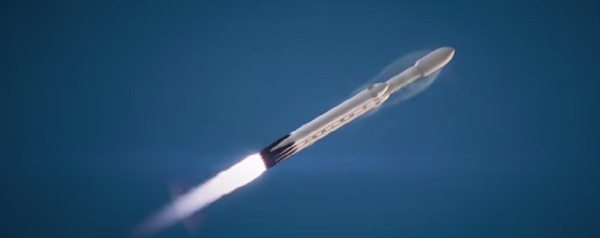
SpaceX: Welcome Back, Baby
Using rocket propulsion, SpaceX guided the stage to a slow, controlled stop at Landing Zone 1, a former U.S. Air Force rocket and missile testing range last used in 1978 in Cape Canaveral, Florida.
Great Image: Not A Galaxy Far, Far Away
“Science fiction has been an inspiration to generations of scientists and engineers, and the film series Star Wars is no exception,” said John Grunsfeld, astronaut and associate administrator for the NASA Science Mission directorate. “There is no stronger case for the motivational power of real science than the discoveries that come from the Hubble Space Telescope as it unravels the mysteries of the universe."
There have been other tie-ins, such as the discussion with a NASA engineer about what it would take to build a Death Star. Let's not roll out that plan just yet since presidential candidate Trump is still looking for something "huge" to resolve matters in the Middle East.This celestial lightsaber does not lie in a galaxy far, far away, but rather inside our home galaxy, the Milky Way. It’s inside a turbulent birthing ground for new stars known as the Orion B molecular cloud complex, located 1,350 light-years away.
Monday, December 21
NASA Needs You!
On Monday, NASA started accepting applications for its new class of astronauts. Applying is simple: Just log in to USAjobs.gov, search for "astronaut," and upload your resume and references. The job description says "Frequent travel may be required."
It's a bit more difficult to be picked. In 2013, more than 6,000 people applied to the program. Only eight were selected. That's an acceptance rate of less than 1 percent.
Control Number: 423817000Department: National Aeronautics and Space Administration
Agency: Lyndon B. Johnson Space Center
Houston, TX View Map
JOB SUMMARY:
NASA is accepting applications for a new class of astronauts. Today, more new human spacecraft are in development in the United States (U.S.) than at any time in history, and future Astronaut Candidates will have the opportunity to explore farther in space than humans have ever been.
The next class of astronauts may fly on any of four different U.S. spacecraft during their careers: the International Space Station (ISS), two new commercial spacecraft being built by U.S. companies, and NASA's Orion deep-space exploration vehicle. NASA is in the midst of an unprecedented transition to using commercial spacecraft for its scheduled crew and cargo transport to the ISS. For the last 15 years, humans have been living continuously aboard the orbiting laboratory, expanding scientific knowledge and demonstrating new technologies. Future crewmembers will continue this work.
Additionally, the Space Launch System rocket and Orion spacecraft, now in development, will launch astronauts on missions to the proving ground of lunar orbit where NASA will learn to conduct complex operations in a deep space environment before moving on to longer duration missions on the journey to Mars.
To date, NASA has selected more than 300 astronauts to fly on its increasingly challenging missions to explore space and benefit life on Earth. More will be needed to crew future ISS missions, as well as, the missions beyond low earth orbit.
To receive consideration you must meet the minimum requirements by the closing date of the announcement; and submit all required information by the closing date of the announcement via USAJOBS. More detailed instructions to follow in the 'How to Apply' section of this announcement.
KEY REQUIREMENTS
- Position subject to pre-employment background investigation
- This is a drug-testing designated position
- Frequent travel may be required
- Selectee must pass a pre-employment medical examination
- Selectee must complete a financial disclosure statement
DUTIES:
Astronauts are involved in all aspects of training for and conducting operations in space, including on the ISS, on Russian Soyuz spacecraft, and in the development and testing of future spacecraft. This includes extravehicular activities (EVA), robotics operations using the remote manipulator system, the ability to operate and conduct research experiments, the ability to operate as a safe member of an aircraft crew (including flight planning and communications), and spacecraft maintenance activities. Astronauts also participate in mission simulations to help themselves and flight controllers in the Mission Control Center operate in the dynamic environment of low earth orbit. Additionally, astronauts serve as the public face of NASA, providing appearances across the country, and sharing NASA's discoveries and goals.
Long-duration missions aboard the ISS generally last from three to six months. Training for long-duration missions is very arduous and takes approximately two to three years. This training requires extensive travel, including long periods away in other countries training with NASA's international partners.
QUALIFICATIONS REQUIRED:
Applicants must meet the following minimum requirements before submitting an application:
1. Bachelor's degree from an accredited institution in engineering, biological science, physical science, computer science, or mathematics.
Notes on Academic Requirements:
Applicants for the Astronaut Candidate Program must meet the basic education requirements for NASA engineering and scientific positions; specifically, successful completion of standard professional curriculum in an accredited college or university leading to at least a bachelor's degree with major study in an appropriate field of engineering, biological science, physical science, computer science, or mathematics.
The following degree fields are not considered qualifying:
--Degrees in Technology (Engineering Technology, Aviation Technology, Medical Technology, etc.)
--Degrees in Psychology (except for Clinical Psychology, Physiological Psychology, or Experimental Psychology, which are qualifying)
--Degrees in Nursing
--Degrees in Exercise Physiology or similar fields
--Degrees in Social Sciences (Geography, Anthropology, Archaeology, etc.)
--Degrees in Aviation, Aviation Management, or similar fields
2. At least 3 years of related, progressively responsible, professional experience obtained after degree completion OR at least 1,000 hours pilot-in-command time in jet aircraft. An advanced degree is desirable and may be substituted for experience as follows: master's degree = 1 year of experience, doctoral degree = 3 years of experience. Teaching experience, including experience at the K - 12 levels, is considered to be qualifying experience for the Astronaut Candidate position, provided the initial degree is qualifying.
3. Ability to pass the NASA long-duration astronaut physical, which includes the following specific requirements:
Distant and near visual acuity must be correctable to 20/20, each eye. The use of glasses is acceptable.
The refractive surgical procedures of the eye, PRK and LASIK, are allowed. Note that such surgeries are permitted, but not required for potential applicants.
Since all crewmembers will be expected to fly aboard a specific spacecraft vehicle and perform EVA activities (spacewalks), applicants must meet the anthropometric requirements for both the specific spacecraft vehicle and the EVA mobility unit (spacesuit). Applicants brought in for an interview will be evaluated to ensure they meet the anthropometric requirements.
Basic Education Requirement: A bachelor's degree from an accredited college or university with major study in engineering, biological science, physical science, computer science, or mathematics.
Degrees in engineering technology are not considered to be qualifying for this position.
An advanced degree is desirable.
U.S. citizenship is required.
HOW YOU WILL BE EVALUATED:
Applicants will be evaluated by an Astronaut Rating Panel based on the academic and work experience qualification requirements stated in this announcement. Eligible candidates will be placed in qualified and highly-qualified categories. Highly-qualified applicants will be evaluated by an Astronaut Selection Board based on the academic and work experience qualification requirements and reference checks. Best qualified applicants will be interviewed. The finalists will be referred to the appropriate official who will make the selections.
BENEFITS:
You can review our benefits at: http://nasapeople.nasa.gov/benefits_lp.htm
OTHER INFORMATION:
These positions are in the excepted service.
Multiple selections may be made under this announcement. Selections will be announced in the spring of 2017. Selected candidates will report for duty at the Johnson Space Center in the fall of 2017.
The pay rates shown reflect the 2015 pay schedules. These rates will be adjusted to reflect any increase in 2017.
Sunday, December 20
Great Image: Another Earthrise
In this composite image we see Earth appear to rise over the lunar horizon from the viewpoint of the spacecraft, with the center of the Earth just off the coast of Liberia (at 4.04 degrees North, 12.44 degrees West). The large tan area in the upper right is the Sahara Desert, and just beyond is Saudi Arabia. The Atlantic and Pacific coasts of South America are visible to the left. On the moon, we get a glimpse of the crater Compton, which is located just beyond the eastern limb of the moon, on the lunar farside.
Thursday, December 17
A New Planet in Our Solar System?
A TNO, or Trans-Neptunian Object (like Pluto), which is any body that orbits the sun beyond Neptune; a Super-Earth, meaning bigger than Earth but smaller than the gas giants like Saturn, Jupiter, Neptune or Uranus; or a very cool brown dwarf, which is what some scientists refer to as a failed star - bigger than Jupiter, but not big enough to produce the fusion necessary to become a star.That is certainly a wide range of possibilities. Scientists with the Department of Earth and Space Sciences, Chalmers University of Technology, Onsala Space Observatory, and SE-439 92 Onsala, Sweden published a paper that stated:
The obvious question then is, what is its nature and why has it escaped earlier detection? Is it always too close to the binary? Is it too cold? In that case, i.e., at temperatures below a hundred Kelvin or so, the non-detection at shorter wavelengths, with e.g.WISE, would be reconcilable.Good questions that other scientists will be very eager to answer.