Showing posts with label Cosmos. Show all posts
Tuesday, May 27
NASA Cannot Do it Alone
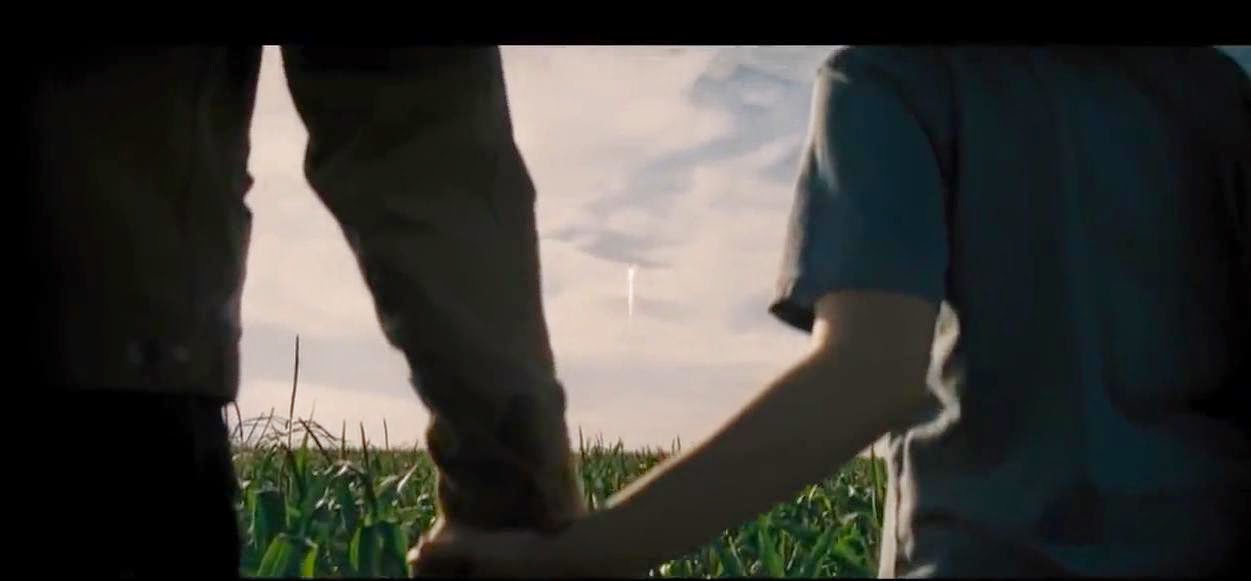
Maybe we need Hollywood to help us to dream. Whether it is the hopeful future portrayed by Star Trek, the encounter with a alien race in the movie Contact, or the horrible space accident in the most recent move Gravity, it always helps to have the imaginative powers of Hollywood on your side. The same is true with the upcoming Christopher Nolan move Interstellar. If this trailer does not get you excited about what may be out there and what we may yet do as a space-faring people, I am not sure what will.
Labels:
Christopher Nolan,
Cosmos,
Gravity,
Interstellar,
Matthew McConaughey,
NASA,
Star Trek
Monday, April 14
More Great Television on the Cosmos
So far I am enjoying the Fox/National Geographic update on Carl Sagan's Cosmos, though the commercials can be somewhat annoying when you are in the middle of an interesting discussion. For instance, during the first episode, Dr. Neil deGrasse Tyson was telling the story about the Roman Catholic Church's persecution of Giordano Bruno when a commercial break pops up to sell the movie Noah. That is not something you would see on PBS. I think I would rather download the program and watch it without such interuptions.
That said, Dr. Tyson has done a good job updating the old Cosmos and paying respect to Carl Sagan in the first few episodes, even noting his meeting with Dr. Sagan and revisiting some of the same iconic locations made famous in the first series.
What surprised me when I re-watched the first episode of the original Cosmos was how it was at the very edge of new discoveries in 1981. Dr. Sagan discussed the Viking rovers on Mars in 1976, the discovery of rings surrounding Uranus in 1977, the discovery of Pluto's moon Charon in 1978, and the sighting of lightening on the dark side of Jupiter in 1979. The solar system was just opening up to us when the show was first broadcast.
And another part of the show was his concern for humanity's future that ran through the original Cosmos, which made sense then with the Cold War and could be mentioned again with the Russians acting up again. Dr. Sagan also mourns the loss of the great library of Alexandria, noting the lost knowledge and thousands of years it took us to regain this knowledge. Of course, I also saw some hopeful items that were not part of the first episode of the new series. For instance, the program gives us a view of potential civilizations on other planets in the Milky Way, which as before we even discovered the existence of any planets around other suns.
And I would like to make a plug for another terrific series that covers the Cosmos - Wonders of the Universe with Dr. Brian Cox. Similar to his earlier Wonders of the Solar System, Dr. Cox is a great story-teller that makes science come alive. And he too discusses our place in this vast cosmos and notes in the first episode that we are at the very beginning of a universe that will last for trillions of years. All of it is awe-inspiring. And one interesting bit of information: at the age of 12, Dr. Cox read Carl Sagan's book Cosmos and this inspired him to become a physicist. I expect his own program will do the same for other young viewers.
That said, Dr. Tyson has done a good job updating the old Cosmos and paying respect to Carl Sagan in the first few episodes, even noting his meeting with Dr. Sagan and revisiting some of the same iconic locations made famous in the first series.
What surprised me when I re-watched the first episode of the original Cosmos was how it was at the very edge of new discoveries in 1981. Dr. Sagan discussed the Viking rovers on Mars in 1976, the discovery of rings surrounding Uranus in 1977, the discovery of Pluto's moon Charon in 1978, and the sighting of lightening on the dark side of Jupiter in 1979. The solar system was just opening up to us when the show was first broadcast.
And another part of the show was his concern for humanity's future that ran through the original Cosmos, which made sense then with the Cold War and could be mentioned again with the Russians acting up again. Dr. Sagan also mourns the loss of the great library of Alexandria, noting the lost knowledge and thousands of years it took us to regain this knowledge. Of course, I also saw some hopeful items that were not part of the first episode of the new series. For instance, the program gives us a view of potential civilizations on other planets in the Milky Way, which as before we even discovered the existence of any planets around other suns.
And I would like to make a plug for another terrific series that covers the Cosmos - Wonders of the Universe with Dr. Brian Cox. Similar to his earlier Wonders of the Solar System, Dr. Cox is a great story-teller that makes science come alive. And he too discusses our place in this vast cosmos and notes in the first episode that we are at the very beginning of a universe that will last for trillions of years. All of it is awe-inspiring. And one interesting bit of information: at the age of 12, Dr. Cox read Carl Sagan's book Cosmos and this inspired him to become a physicist. I expect his own program will do the same for other young viewers.
Sunday, February 16
A New Cosmos is Coming, But Not on PBS
Like millions of people, I am a fan of Carl Sagan's Cosmos series from 1980. The program, Cosmos: A Personal Journey, brought a fascinating and understandable form of astronomy into America's living rooms. The program was viewed by more than 750 million people and won both Emmy and Peabody awards.
Dr. Sagan put the universe, and our place in it, into a context that continues to fascinate today, particularly the cosmic calendar. The calendar demonstrated that, if all time was condensed to a year, we humans would have first appeared on December 31st during the remaining 8 minutes of the year, with our written history appearing in the last 13 seconds. Certainly a mind-blowing way to show our place in time.
So is it time for an updated version of Cosmos? It seems the Fox network and the National Geographic Channel feels it is and it has brought in Dr. Neil deGrasse Tyson, an astrophysicist, to renew the role of Dr. Sagan. The new program, to be broadcast next month, is called Cosmos: A SpaceTime Odyssey. You can view a trailer for the show here.
It is a wise choice in terms of a popular scientist who can make the complex fun. However, I am more comfortable with PBS, the creator of NOVA and Frontline, taking the helm than Fox, the creator of the Simpsons and Fox News. In fact, Fox is bringing in the animation skills of Seth MacFarlane, creator of Family Guy. Does this mean a talking dog will explain the process of searching for exoplanets? I hope not.
The original Cosmos is one of those television jewels that most likely will never be duplicated, but time moves on (yes, that last second of the year) and new stories need to told. Let's hope Dr. Tyson can create a whole new generation of fans staring at the stars for answers.
Update: The new Cosmos series premieres on Fox and the National Geographic Channel on March 9th.
Dr. Sagan put the universe, and our place in it, into a context that continues to fascinate today, particularly the cosmic calendar. The calendar demonstrated that, if all time was condensed to a year, we humans would have first appeared on December 31st during the remaining 8 minutes of the year, with our written history appearing in the last 13 seconds. Certainly a mind-blowing way to show our place in time.So is it time for an updated version of Cosmos? It seems the Fox network and the National Geographic Channel feels it is and it has brought in Dr. Neil deGrasse Tyson, an astrophysicist, to renew the role of Dr. Sagan. The new program, to be broadcast next month, is called Cosmos: A SpaceTime Odyssey. You can view a trailer for the show here.
It is a wise choice in terms of a popular scientist who can make the complex fun. However, I am more comfortable with PBS, the creator of NOVA and Frontline, taking the helm than Fox, the creator of the Simpsons and Fox News. In fact, Fox is bringing in the animation skills of Seth MacFarlane, creator of Family Guy. Does this mean a talking dog will explain the process of searching for exoplanets? I hope not.
The original Cosmos is one of those television jewels that most likely will never be duplicated, but time moves on (yes, that last second of the year) and new stories need to told. Let's hope Dr. Tyson can create a whole new generation of fans staring at the stars for answers.
Update: The new Cosmos series premieres on Fox and the National Geographic Channel on March 9th.
Thursday, November 15
Happy Birthday, Carl Sagan!
Okay, I am a few days late since his birthday was last Friday (November 9), but I did not want the occasion to pass without a quick note. While Dr. Sagan passed away about 16 years ago, his papers, books and television series Cosmos, as well as the Carl Sagan Memorial Station on Mars, are constant reminders of the talents and hard work he brought to astronomy and cosmology. He was the great popularizer of science, as well as a social critic forever warning us of our blind spots. In this 1994 interview with Anne Kalosh, he voiced his concerns:
We live in a society absolutely dependent on science and technology and yet have cleverly arranged things so that almost no one understands science and technology. That's a clear prescription for disaster.
A nice way to remember Dr. Sagan is to listen to his words in this video about this Pale Blue Dot we call home.
We live in a society absolutely dependent on science and technology and yet have cleverly arranged things so that almost no one understands science and technology. That's a clear prescription for disaster.
A nice way to remember Dr. Sagan is to listen to his words in this video about this Pale Blue Dot we call home.
Subscribe to:
Posts (Atom)


