Thursday, May 29

Upcoming International Space Station Conference

The 3rd International Space Station Research and Development Conference takes place in Chicago next month.  From June 17-19, 2014, participants will meet at the Hyatt Regency McCormick Place in Chicago to discuss a variety of topics such as:

- Life Sciences in Microgravity;
- ISS: Pathways to Mars; and
- Entrepreneurship on the ISS- Case Studies.
 
There is still time to register.  

It is good to see the science and planning continues while NASA and its Russian counterparts still argue about the future of the space station.  Ultimately we want to ensure we continue to obtain solid achievements from our $100 billion investment, whether we do it in unison with or without the Russians.

Tuesday, May 27

NASA Cannot Do it Alone

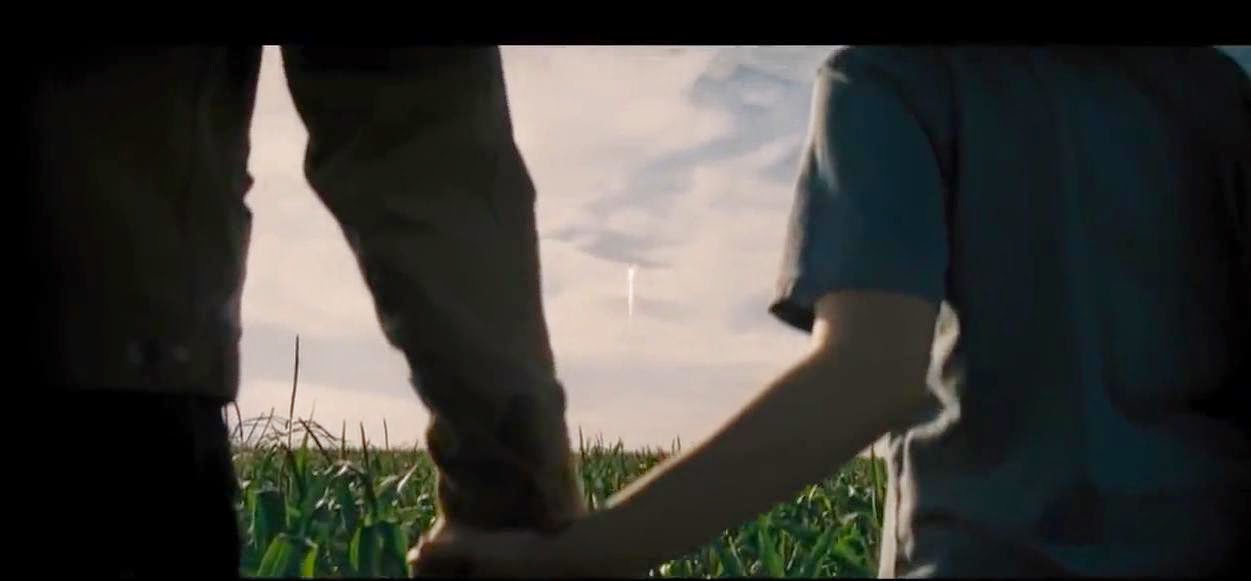
Maybe we need Hollywood to help us to dream.  Whether it is the hopeful future portrayed by Star Trek, the encounter with a alien race in the movie Contact, or the horrible space accident in the most recent move Gravity, it always helps to have the imaginative powers of Hollywood on your side.  The same is true with the upcoming Christopher Nolan move Interstellar.  If this trailer does not get you excited about what may be out there and what we may yet do as a space-faring people, I am not sure what will. 

Great Image: Moon and Saturn Occultation


The composite image above shows the Moon Saturn Occultation from May 14th.  Created by amateur astronomer Paul Steward (see more of his work here), it was highlighted by Phil Plait in his Slate magazine column:
While these two tracks cross each other, it’s relatively rare for the Moon and Saturn to be at the same place at the same time. But it does happen, and it’s called an occultation. The Moon slowly covers Saturn, blocking it for some time, then once again moves out of the way to reveal the ringed planet. In this case, the timing of the May 14 occultation made it visible only for observers in the southern hemisphere, specifically Australia and New Zealand.
Image Credit:  Paul Steward, New Zeland

Saturday, May 24

...and the End of the Universe

PBS has created a short video to discuss the life expectancy of the Earth and the universe itself.  The 5 and a half minute video is called The Far Future of the Universe and is part of PBS digitalstudios' It's okay to Be Smart series.  In the video, host Joe Hanson provides a number of useful mileposts for the future, including:

  • In 100,000 years not a single constellation we know today will be recognizable;
  • In 600 million years photosynthesis will end for 99 percent of the Earth's plants;
  • In 1 billion years the sun will boil away the Earth's oceans and only bacteria will remain (see image above - the Earth looks like Mars);
  • In 4 billion years the Milky Way galaxy will collide with the Adromena galaxy;
  • In 7.9 billion years our Sun will expand to swallow Mercury and Venus; and
  • In 110 trillion years all stars throughout the universe will flicker out.
But wait, there's more.  The Earth still may still exist after all of that.  Go to the video to learn more.  It is a fascinating tale.   

Sunday, May 18

The Beginning of the Universe...


If you want to see how the universe expanded into what we see today, or at least see a computer simulation of this process, you should visit the Illustris project.  Here is how the site defiines the project:

The Illustris project is a set of large-scale cosmological simulations, including the most ambitious simulation of galaxy formation yet performed. The calculation tracks the expansion of the universe, the gravitational pull of matter onto itself, the motion or "hydrodynamics" of cosmic gas, as well as the formation of stars and black holes. These physical components and processes are all modeled starting from initial conditions resembling the very young universe 300,000 years after the Big Bang and until the present day, spanning over 13.8 billion years of cosmic evolution. The simulated volume contains tens of thousands of galaxies captured in high-detail, covering a wide range of masses, rates of star formation, shapes, sizes, and with properties that agree well with the galaxy population observed in the real universe. We are currently working to make detailed comparisons of our simulation box to these observed galaxy populations, and some exciting promising results have already been published.
In an MIT press release, we learn about how this simulation is the first successful attempt to account for our current universe:

“For the past two decades, cosmologists have been unable to produce galaxies like the Milky Way in their simulations,” says David Spergel, a professor of astronomy at Princeton University. “We have long debated whether this failure was due to complex dark matter physics, unknown stellar feedbacks, or the difficulties in simulating the highly non-linear multi-scale process of galaxy formation … With their simulations, [the researchers] finally produce galaxies that look like our own.”
And this is quite a project in terms of the scientists, computer resources, and sources of funding.  The MIT press release noted that the paper, “Properties of galaxies reproduced by a hydrodynamic simulation,” was co-written by 10 authors at several institutions: the Harvard-Smithsonian Center for Astrophysics (CfA); the Heidelberg Institute for Theoretical Studies in Germany; the University of Heidelberg; the Kavli Institute for Cosmology and the Institute of Astronomy, both in Cambridge, England; the Space Telescope Science Institute in Baltimore; and the Institute for Advanced Study in Princeton, N.J.

The computing centers used to run the simulation were the Harvard Odyssey and CfA/ITC cluster; the Ranger and Stampede supercomputers at the Texas Advanced Computing Center; the CURIE supercomputer at CEA/France; and the SuperMUC computer at the Leibniz Computing Centre in Germany.

Support for the research came from the German Research Foundation, the European Research Council, NASA, and the Alexander von Humboldt Foundation in Germany.

Image Credit:  Illustris project

ISS Crew and Dragon Return to Earth

Last week we saw the return of three of the crew from the International Space Station (ISS) after 188 days in space. The Russian Soyuz spacecraft successfully landed in Kazakhstan with the Expedition 39 crew, including Commander Koichi Wakata of the Japan Aerospace Exploration Agency, Soyuz Commander Mikhail Tyurin of Roscosmos, the Russian Federal Space Agency, and Flight Engineer Rick Mastracchio of NASA. Mastracchio was busy during this last mission with three spacewalks to repair both a cooling pump and a computer backup.  NASA stated the next crew is not expected to launch to the ISS until May 28th.  

SpaceX's Dragon was also released earlier today for its return to the Pacific Ocean (see picture above).  The Dragon first arrived on April 20th with about 2.5 tons of crew supplies, cargo, and science gear.  This is SpaceX's third successful delivery to the ISS. Hopefully, sooner rather than later we can get crew members onto the ISS with the help of SpaceX and other U.S. parties. 

Image Credit:  NASA

Sunday, May 11

Why Are We Using Russian Rockets?

I can understand that we are dependent on the Russians for a lift to the International Space Station (ISS) while we rebuild our spacefaring capacity after the loss of the shuttle program.  However, we are also dependent on Russian rockets in other parts of our space program, such as the Atlas rockets.  I was reading about how a federal judge recently lifted a temporary injunction against the United Launch Alliance's (ULA) procurement of Russian rocket engines.  Per the Red Orbit article, SpaceX had complained that ULA was violating the U.S. sanctions against Russia.  While the U.S Government determined this was not the case, I still wonder whether this is wise regardless of the sanctions.  The U.S. should be building more of it space program at home, so I agree with SpaceX even if its argument is a little self-serving. 

And what is ULA, which attacked SpaceX's concerns, stating "SpaceX’s actions are self-serving, irresponsible and have threatened the U.S.’s involvement with the International Space Station and other companies and projects working with Russian State entities"?  Per its webpage, ULA is a joint venture between Lockheed-Martin and Boeing running the Atlas V, Delta II, and Delta IV rocket programs.  Its customers include NASA, the Pentagon, and our spy agencies.  And is it a monopoly, as claimed by SpaceX?  Yes, albeit a regulated monopoly as is much of the space and defense industry where a few firms control most of the contracts.  This has been an a sad reality for a long time, which may explain some of the decline in America's space ventures (that, and a short-sighted Congress).  Luckily, we have many new space adventurists with new ideas, with SpaceX being one of many up-and-coming companies willing to offer new approaches to the help America to the stars, or at least low-Earth orbit. 

But the real issue on the table is whether this American monopoly should use Russian rockets.  And I would rather we develop what we need at home but keep some other options on the shelf, which could include a few Russian products.  While some may argue foreign parts are cheaper, we may need to dig deeper into Elon Musk's arguments in his testimony before the Senate in March, when he stated:
 In FY13 the Air Force paid on average in excess of $380 million for each national security launch, while subsidizing ULA’s fixed costs to the tune of more than $1 billion per year, even if the company never launches a rocket.  By contrast, SpaceX’s Falcon 9 price for an EELV mission is well under $100M—at least a $280 million per launch difference, which in many cases could pay for the satellite and launch combined – and SpaceX seeks no subsidies to maintain our business. To put this into perspective, had SpaceX been awarded the missions ULA received under its recent non-competed 36 core block buy, we would have saved the taxpayer $11.6 billion.
And leaving costs and the embargo to one side, we really need to rethink our space program procurement.  We need a little more common sense in the program.  Elon Musk made this as his last point in the March testimony:
Our Falcon 9 and Falcon Heavy launch vehicles are truly made in America.  We design and manufacture the rockets in California and Texas, with key suppliers throughout the country, and launch them from either Vandenberg AFB or Cape Canaveral AFS.  This stands in stark contrast to the United Launch Alliance’s most frequently flown vehicle, the Atlas V, which uses a Russian main engine and where approximately half the airframe is manufactured overseas.  In light of Russia’s de facto annexation of the Ukraine’s Crimea region and the formal severing of military ties, the Atlas V cannot possibly be described as providing “assured access to space” for our nation when supply of the main engine depends on President Putin’s permission
The part about "President Putin's permission" does not sound that far fetched after the comments a few weeks back by Dmitry Rogozin, the head of Russia’s space program, who said "I suggest the US deliver its astronauts to the ISS with a trampoline."

Time to wake up, America.  If you build your house on a pile of sand, do not be surprised when it is all washed away. 

Saturday, May 10

Bing Brings you Saturn

Today's homepage image on Bing was an image of Saturn taken by the Cassini probe.  I cannot remember the last time Bing highlighted an astronomy issue like this (though I am sure it happens and I just missed it).  Here is the story that goes along with today's image:
The sixth planet in our solar system, Saturn, with its distinctive rings, is probably the most recognizable planet after Earth—at least to us Earthlings. A NASA spacecraft called Cassini-Huygens took this photo. The craft’s sole mission was to fly directly to Saturn and then explore the planet as well as its rings and moons.
A recent discovery on one of Saturn’s smaller moons, Enceladus, has scientists clamoring for more information. Data collected by Cassini-Huygens has revealed a body of water, probably about the size of Lake Superior, below the moon’s surface. The discovery of water has suddenly made Enceladus a prime target in the search for life beyond Earth, since water is the basis for all life as we know it.
That discovery may prompt scientists to launch an additional satellite to Saturn, but it would be years before data would reach Earth. Saturn’s far away. Really far away. About 745 million miles away when Earth and Saturn are at their closest. Okay, that doesn’t mean anything to us, either, but consider, for example, that Cassini-Huygens launched in 1997, but didn’t enter Saturn’s orbit until 2004. We could be waiting awhile before learning if we have neighbors in the solar system.
Image Credit per Bing: NASA/JPL-Caltech/SSI

Wednesday, April 30

Great Image: The Curiosity Rover From Above

In the image above from earlier this month, the Mars Reconnaissance Orbiter is looking down on Mars' surface and caught a shot of the Curiosity Rover as it explored the surface of the planet.  Here is the story from NASA's Jet Propulsion Laboratory: 
NASA's Curiosity Mars rover and tracks from its driving are visible in this view from orbit, acquired on April 11, 2014, by the High Resolution Imaging Science Experiment (HiRISE) camera on NASA's Mars Reconnaissance Orbiter.
The rover is near the largest butte in the lower left quadrant of the image, at about a two o'clock position relative to the butte. It appears bright blue in the exaggerated color of this image.
The multi-layered location filling much of the left half of this image is called "the Kimberley." Curiosity's science team chose it, based on other HiRISE images, as a potential gold mine for the rover mission. Black gold, that is, as organic material that, if found at the Kimberley could be a biomarker (sign of past life) -- the holy grail of Mars exploration.
Curiosity entered the area included in this image on March 12, along the tracks visible near the upper left corner. The distance between parallel wheel tracks is about 9 feet (2.7 meters). The area included in the image is about 1,200 feet (about 365 meters) wide. This view is an enhanced-color product from HiRISE observation ESP_036128_1755, available at the HiRISE website at http://uahirise.org/releases/msl-kimberley.php. The exaggerated color, to make differences in Mars surface materials more apparent, makes Curiosity appear bluer than the rover really looks. A stereo view combining information from this observation with topography derived from earlier HiRISE observations, for a three-dimensional appearance, is at PIA18082.
Image Credit: NASA/JPL-Caltech/Univ. of Arizona

Sunday, April 27

Kepler-186f: Finding the Needle in a Haystack of Data

The recent announcement that Kepler located an Earth-like planet 500 light years away was the product of detailed research on a trove of data collected during Kepler's lifetime.  Kepler-186f is similar to the size of Earth and within its star's habitable zone. The planet's sun is a dwarf star located in the constellation Cygnus.  The star is smaller than our sun and provides only about 1/3 the heat of our sun. A year on Kepler-186f, which is about 1.1 times the radius of the Earth, is about 130 days.

The full story can be found in Science magazine in a report titled "An Earth-Sized Planet in the Habitable Zone of a Cool Star."  Pretty straight forward like those all blue paintings titled "Blue."  The report abstract is a little more detailed:

The quest for Earth-like planets is a major focus of current exoplanet research. Although planets that are Earth-sized and smaller have been detected, these planets reside in orbits that are too close to their host star to allow liquid water on their surfaces. We present the detection of Kepler-186f, a 1.11 ± 0.14 Earth-radius planet that is the outermost of five planets, all roughly Earth-sized, that transit a 0.47 ± 0.05 solar-radius star. The intensity and spectrum of the star’s radiation place Kepler-186f in the stellar habitable zone, implying that if Kepler-186f has an Earth-like atmosphere and water at its surface, then some of this water is likely to be in liquid form.
It is possible that more such exoplanets may emerge from Kepler's archived data as scientists sift through the information.  While Kepler's original mission may have ended last year, the scientific community has plenty of data to play with for years to come.  It reminds me of archaeology, where digging can be the easy part while cataloging the find an putting together the various pieces takes many more years as association with other artifacts takes place and theories are confirmed.  

In a press release, NASA noted that we are not necessarily looking at a twin Earth but more likely a distant cousin:
 "Being in the habitable zone does not mean we know this planet is habitable. The temperature on the planet is strongly dependent on what kind of atmosphere the planet has," said Thomas Barclay, research scientist at the Bay Area Environmental Research Institute at Ames, and co-author of the paper. "Kepler-186f can be thought of as an Earth-cousin rather than an Earth-twin. It has many properties that resemble Earth."

Of course Kepler-186f is not the most interesting name.  Late night host Craig Ferguson had his own ideas recently, noting "I think we have to be more creative...This planet is big and old and surrounded by stars a fraction of its age.  Why don't we call it George Clooney."  Okay, maybe Mr. Ferguson can work on his astronomy and we can keep trying on the name.

Image Credit:  NASA Ames/SETI Institute/JPL-CalTech

Monday, April 14

More Great Television on the Cosmos

So far I am enjoying the Fox/National Geographic update on Carl Sagan's Cosmos, though the commercials can be somewhat annoying when you are in the middle of an interesting discussion.  For instance, during the first episode, Dr. Neil deGrasse Tyson was telling the story about the Roman Catholic Church's persecution of Giordano Bruno when a commercial break pops up to sell the movie Noah.  That is not something you would see on PBS.  I think I would rather download the program and watch it without such interuptions.

That said, Dr. Tyson has done a good job updating the old Cosmos and paying respect to Carl Sagan in the first few episodes, even noting his meeting with Dr. Sagan and revisiting some of the same iconic locations made famous in the first series. 

What surprised me when I re-watched the first episode of the original Cosmos was how it was at the very edge of new discoveries in 1981.  Dr. Sagan discussed the Viking rovers on Mars in 1976, the discovery of rings surrounding Uranus in 1977, the discovery of Pluto's moon Charon in 1978, and the sighting of lightening on the dark side of Jupiter in 1979.  The solar system was just opening up to us when the show was first broadcast. 

And another part of the show was his concern for humanity's future that ran through the original Cosmos, which made sense then with the Cold War and could be mentioned again with the Russians acting up again.  Dr. Sagan also mourns the loss of the great library of Alexandria, noting the lost knowledge and thousands of years it took us to regain this knowledge.  Of course, I also saw some hopeful items that were not part of the first episode of the new series.  For instance, the program gives us a view of potential civilizations on other planets in the Milky Way, which as before we even discovered the existence of any planets around other suns.

And I would like to make a plug for another terrific series that covers the Cosmos - Wonders of the Universe with Dr. Brian Cox.  Similar to his earlier Wonders of the Solar System, Dr. Cox is a great story-teller that makes science come alive.  And he too discusses our place in this vast cosmos and notes in the first episode that we are at the very beginning of a universe that will last for trillions of years.  All of it is awe-inspiring.  And one interesting bit of information:  at the age of 12, Dr. Cox read Carl Sagan's book Cosmos and this inspired him to become a physicist.  I expect his own program will do the same for other young viewers. 

Monday, April 7

Away from the Politics II: Discoveries in the Solar System

The past few weeks have been full of announcements on discoveries within our solar system.  Here are some of the highlights:

  • Subsurface Lake on Enceladus:  NASA's Cassini probe has identified a reservoir of water on Saturn's moon (shown above in comparison to our own Moon) that is 19 to 25 miles thick, or equivalent to the water in one of the Great Lakes (I have read comparisons to either Lake Erie or Lake Superior).  What does this mean?  NASA stated: "The subsurface ocean evidence supports the inclusion of Enceladus among the most likely places in our solar system to host microbial life."  Interesting indeed.
  • An Asteroid with Rings:  Rings were found around an asteroid named Chariklo, which orbits in the outer solar system between Saturn and Uranus.  Chariklo is one of the larger objects in that region being about 155 miles across. This is the first non-planetary body in our solar system we have identified with its own rings.
  • New Icy Object Beyond the Kuiper Belt:  Astronomers have spotted a new object now labeled 2012VP113 (not very dramatic) that orbits outside the Kuiper Belt, which contains Pluto.  We already know that dwarf planet Sedna is out in those reaches.  This raises some interesting questions.  The Sydney Morning Herald reports this could indicate something is pulling these ice objects out that far, such as undiscovered giant planet or maybe a passing star from long ago. 

Sunday, April 6

Away from the Politics: More on the Big Bang

While the U.S. and Russia have been tussling on a variety of issues, some solid science has been going on unabated.  For instance, last month the Harvard-Smithsonian Center for Astrophysics announced the discovery of gravitational waves formed when the universe was a trillionth of a trillionth of a second old.  While I cannot really wrap my head around the particulars, this discovery (if successfully duplicated by others) could further confirm the theory of cosmic inflation, or the idea of rapid expansion of the universe in the first 380,000 years of its existence.  I found a nice scientific cartoon (really) that walks us through these ideas at PhD Comics.  And here is the March 17th video from the Center with the scientific announcement.


The research itself involved scientists from the Harvard-Smithsonian Center for Astrophysics (CfA), Stanford University, the California Institute of Technology (Caltech), and the University of Minnesota, while the observations themselves were made at the BICEP2 telescope near the South Pole

Friday, April 4

NASA Ends Connections with Russia

It was only a matter of time.  NASA has decided to end contact with the Russians on most space ventures with the exception of the International Space Station (ISS), which makes sense since they are our only ride to the station at the moment.  We may want to make a point, but we are not foolish enough to jeopardize a $100 billion station.

According to MSN News, the leaked NASA memo stated:

NASA employees can't travel to Russia or host visitors until further notice. They're also barred from emailing or holding teleconferences with their Russian counterparts because of Russia's actions in Ukraine...
The picture above may be the last American-Russian family photo for awhile.  The current ISSExpedition 39 crew members pictured on the front row are Japan Aerospace Exploration Agency (JAXA) astronaut Koichi Wakata (right), commander; and NASA astronaut Steve Swanson, flight engineer. Pictured from the left (back row) are Russian cosmonauts Oleg Artemyev, Alexander Skvortsov, Mikhail Tyurin and NASA astronaut Rick Mastracchio, all flight engineers.

Photo credit: NASA

Thursday, April 3

Elon Musk on 60 Minutes - More Than Rockets

Sunday night's 60 Minutes had a nice piece on Elon Musk's efforts as a carmaker and rocket builder.  The uncertain nature of his initial ventures and astounding success in the face of critics is impressive.  We have all heard of the success of SpaceX, but his efforts with Telsa are also impressive.  It is amazing that $60,000 to $100,000 electric cars are selling so well, but the real story is his attempts to do something new, change perceptions, and then bring down the price for the average American.

Here is part of the conversation on Sunday night, which shows Mr. Musk's willingness to learn but may make investors wary:
Scott Pelley: How did you figure you were going to start a car company and be successful at it?
Elon Musk: Well, I didn't really think Tesla would be successful. I thought we would most likely fail. But I thought that we at least could address the false perception that people have that an electric car had to be ugly and slow and boring like a golf cart.
Scott Pelley: But you say you didn't expect the company to be successful? Then why try?
Elon Musk: If something's important enough you should try. Even if you -- the probable outcome is failure.
The Telsa Model S was the Motor Trend 2013 Car of the Year, with the magazine noting:
The 2013 Motor Trend Car of the Year is one of the quickest American four-doors ever built. It drives like a sports car, eager and agile and instantly responsive. But it's also as smoothly effortless as a Rolls-Royce, can carry almost as much stuff as a Chevy Equinox, and is more efficient than a Toyota Prius. Oh, and it'll sashay up to the valet at a luxury hotel like a supermodel working a Paris catwalk. By any measure, the Tesla Model S is a truly remarkable automobile, perhaps the most accomplished all-new luxury car since the original Lexus LS 400. That's why it's our 2013 Car of the Year.
Even with this success, Mr. Musk still faces problems distributing his cars in some states. For instance, New Jersey may take away Telsa's license to sell cars directly to customers and bypass dealerships.  Then again, he has faced even greater challenges in the past and won. 

Monday, March 31

Great Image: Dark Barchan Dunes on Mars

Some were curious about "canals" on Mars many years back, but what would early astronomers made of the image here?  Military fortifications? Large land crabs?  Something else?  Well, here is Malin Space Science Systems' version of the story:  
This Mars Global Surveyor (MGS) Mars Orbiter Camera (MOC) image shows north polar sand dunes in the summertime. During winter and early spring, north polar dunes are covered with bright frost. When the frost sublimes away, the dunes appear darker than their surroundings. To a geologist, sand has a very specific meaning. A sand grain is defined independently of its composition; it is a particle with a size between 62.5 and 2000 microns. Two thousand microns equals 2 millimeters. The dunes are dark because they are composed of sand grains made of dark minerals and/or rock fragments. Usually, dark grains indicate the presence of unoxidized iron, for example, the dark volcanic rocks of Hawaii, Iceland, and elsewhere. This dune field is located near 71.7°N, 51.3°W. Dune slip faces indicate winds that blow from the upper left toward lower right. This picture covers an area approximately 3 km (1.9 mi) across and is illuminated by sunlight from the lower left.
 Image Credit:  NASA/JPL/Malin Space Science Systems

Saturday, March 29

SpaceX Delays Returns to the Space Station

After a delay earlier this month, SpaceX was scheduled to its third resupply mission to the International Space Station (ISS) on March 30th.  However, the mission, SpaceX-3 (pictured here), has been delayed again due to an electrical short in the tracking radar. According to the U.S. Air Force:
A mandatory range asset supporting the NROL-67 launch went offline, March 24, 2014. An investigation revealed a tracking radar experienced an electrical short, overheating the unit and rendering it inoperable. The outage resulted in an inability to meet minimum public safety requirements needed for flight, so the launch was postponed.
Initial assessment indicates repair of the tracking radar will take approximately three weeks. The Air Force is evaluating the feasibility of returning an inactive radar to full mission capability to resume operations sooner. The launch schedule impact is to be determined, pending resolution of the anomaly. Early indications are all launches scheduled for FY14 will be supported. More information will be provided as it becomes available.
The launch, originally schedule for March 16, will provide the ISS with a variety of needed items while also delivering and removing scientific cargo.  According to SpaceX, the Dragon cargo includes:
 ...about 4,600 pounds of supplies and payloads, including critical materials to support more than150 investigations that will occur during Expeditions 39 and 40. Dragon will carry four powered cargo payloads in its pressurized section and two in its unpressurized trunk, a first for SpaceX. Dragon will return with about 3,600 pounds of cargo, which includes crew supplies, hardware and computer resources, science experiments, biotechnology,and space station hardware.
 Science payloads include the Optical Payload for Lasercomm Science (OPALS), which will test the use of laser optics to transfer information to Earth from space; the Vegetable Production System (VEGGIE), a unit capable of producing salad-type vegetables in space; and the T-Cell Activation in Aging experiment that seeks the cause of a depression in the human immune system while astronauts are in microgravity. In addition, the High Definition Earth Viewing (HDEV) investigation includes four high-definition cameras to be placed on the space station’s exterior for use in streaming live video of Earth for online viewing.
Go here for the completed press kit from SpaceX.  You can also stay up to date on the mission via NASA's SpaceX Blog

Thursday, March 27

An Expensive Miss on a Russian Rocket

Given that we are now paying the Russians about $71 million per seat to get an astronaut to the International Space Station (ISS), maybe they felt a longer ride would give us more for our money.  That seems to be the case since the most recent Russian Soyuz space capture missed its connection with the ISS and the American and Russian passengers will have to wait another 36 hours before trying again.  The good news is that they are used to this longer trip, with the shorter 6 hour trip being a pretty new development since last year.

NASA's Steve Swanson and Russians Alexander Skvortsov and Oleg Artemyev are fine and everything should continue without a hitch.  The problem seems to be a software glitch that prevented a 24-second engine burn to align the capsule with the ISS.

We are lucky we still have the Russians to get passengers to the ISS until we can bring in our private sector partners.  SpaceX has another ISS resupply mission this weekend, so things are on track for the U.S. to be back in the space station transportation business.

Update:  The new ISS crew is safe and sound after a longer than expected delay.  NASA reported:
The new trio docked Thursday to the Poisk docking compartment at 7:53 p.m. EDT and opened the hatches less than two hours later to greet Commander Koichi Wakata and Flight Engineers Rick Mastracchio and Mikhail Tyurin. The sextet then gathered inside the Zvezda service module for a welcoming ceremony with words of congratulations from family members and mission officials.

Saturday, March 22

33rd International Space Development Conference

If you want to learn more about the "colonization, development, and capitalization of space," the National Space Society (NSS) has a conference for you on May 14-18 in Los Angeles.  The NSS's 33rd International Space Development Conference will be held at the Sheraton Gateway Hotel.

The NSS invites members of the general public, space activists, scientists, engineers, educators, astronauts, aerospace industry leaders, and government officials to explore humanity's future in space. The conference will feature a number of speakers sharing their ideas about future space missions, including Space X CEO Elon Musk, Apollo 11 Astronaut Buzz Aldrin, Orbital Sciences VP Mike Pinkston, members of the Mercury MESSENGER Team, and many others. 

The conference will also have a Space Settlement Design Contest,which is an annual contest co-sponsored by the NSS and the NASA Ames Research Center.  Any student (up to age 18) from anywhere in the world can participate. Interested parties need to submit a paper relating to orbital settlements, with the contest rules stating "Settlements may not be on a planet or moon...Settlements must be permanent, relatively self-sufficient homes, not temporary work camps."

The contest is serious work.  A six member team from Cypress Bay High School Weston, Florida, won the context in 2013 with their 126 page paper Maui.  According to the winning paper's executive summary, 
...Maui tells a story, the story of how extraterrestrial colonies may grow and develop from ramshackle frontier towns to bustling cities. Maui is the narrative of mankind’s first permanent settlement in the Saturn system, orbiting the moon Titan.
Prior conferences and speaker presentations can be found here.  Past student contest winners back to 1994 can be found here.

Image Credit and more photo information:  http://space.mike-combs.com/gallery.htm

Monday, March 17

How About Russia and Mars?

The International Space Station may still be seen as successful U.S.-Russian cooperation, what about a future Mars mission?  Dr. Robert Zubrin, President of The Mars Society, had some grim words about Russia prior to the invasion of Ukraine in Fall 2013 edition of The Mars Quarterly.  In his article, he discusses some dark comments by Putin advisor Alexander Dugin:
"Liberalism,” says Dugin, meaning the whole western consensus, “is an absolute evil....Only a global crusade against the U.S., the West, globalization and their political-ideological expression, liberalism, is capable of becoming an adequate response...The American empire should be destroyed.”
Notheless, Dr. Zubrin still believed in a joint U.S.-Russian mission to Mars, noting, "Dr. Carl Sagan proposed a similar concept to help counteract U.S.-Soviet tensions in the 1980s. It was a good idea then, but critically necessary one now"

I am not sure if the recent events in Ukraine may have changed the mind of Dr. Zubrin, but I think we need to be very careful here.  The International Space Station already hands in the balance.  Do we want more of our NASA dollars dependent on a fickle and growingly reckless Russia?  My tendency is to say no for now.

Let's put any joint Mars mission on the shelf until we know we are able to work together with Russia on this planet.